
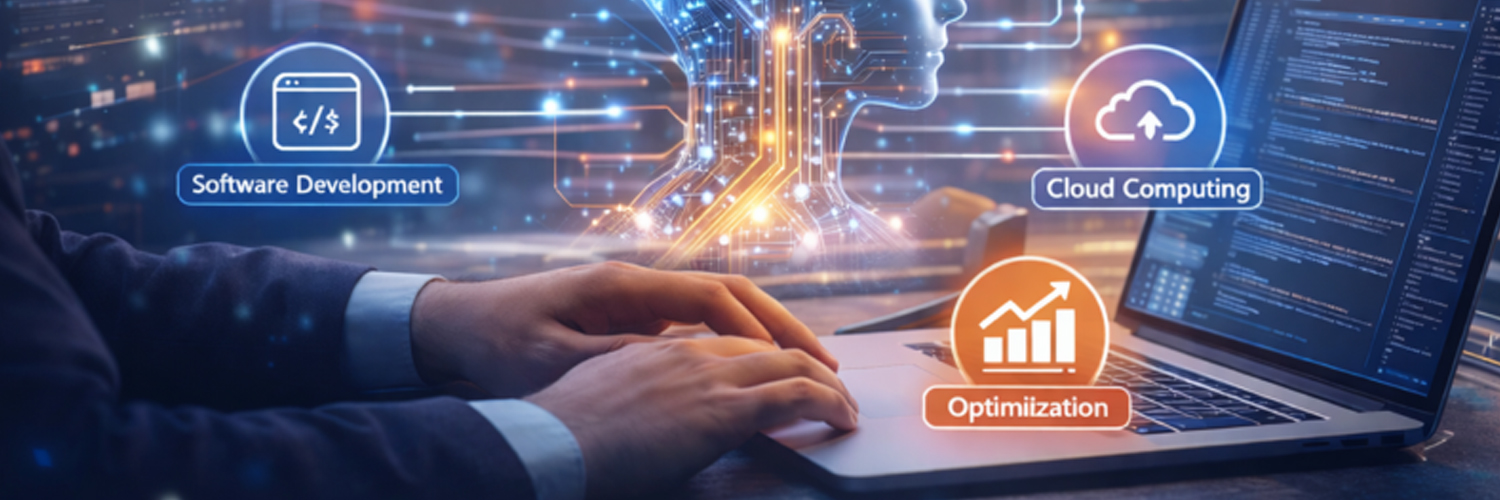
Artificial Intelligence (AI) is no longer an experimental layer in software development. In 2025, it has become a core foundation of AI powered product development, influencing how products are planned, designed, built, and continuously improved. From early-stage ideation to post-launch optimization, AI is reshaping the AI product development lifecycle and redefining how teams create value through technology.
Earlier, product decisions were often based on assumptions, limited user feedback, or delayed analytics. Today, AI enables teams to move beyond guesswork and build products that evolve intelligently with user behavior – clearly highlighting the role of AI in product development across industries.
AI-Driven Product Decision-Making
One of the biggest shifts that AI has brought about is the move toward intelligent, data-driven decision-making. The role of AI in product development is especially visible in how product teams now rely on real-time insights rather than intuition alone.
With AI, teams can:
- Spot user behavior trends across different platforms
- Anticipate future user needs and preferences
- Rank features based on actual usage data
- Fine-tune product roadmaps with greater precision
This approach strengthens AI powered product development by ensuring smarter planning, reduced rework, and closer alignment between business objectives and user expectations.
Transforming User Experience Through Intelligence
AI is becoming an essential part of modern UX design. Through AI driven UX design, teams analyze how users pause, scroll, abandon flows, or engage deeply with interfaces. These insights help create experiences that feel intuitive and personalized.
Key improvements driven by AI driven UX design include:
- Personalization that adapts to user behavior
- Interfaces that evolve based on usage patterns
- Faster identification of usability challenges
- Continuous UX enhancement without long testing cycles
As a result, digital products become more responsive, engaging, and aligned with real-world user needs.
Improving Development Efficiency and Code Quality
AI is also transforming internal engineering workflows. With AI assisted software development, teams can improve code quality, reduce repetitive tasks, and catch issues earlier in the process.
AI improves development efficiency by:
- Suggesting optimized code patterns
- Detecting vulnerabilities during development
- Automating repetitive coding and testing tasks
- Reducing post-release bugs through smarter test coverage
These improvements strengthen the AI in software development lifecycle, helping teams build scalable and maintainable products faster.
AI-Powered Testing and Predictive Maintenance
Modern quality assurance relies heavily on AI powered testing tools that go beyond traditional test cases. Automated testing powered by AI can uncover edge cases and performance risks that manual testing often misses.
Another major advantage of AI is predictive maintenance in software. Instead of reacting to failures, AI systems continuously analyze logs, traffic patterns, and system behavior to anticipate issues before they occur.
This enables:
- Early detection of performance bottlenecks
- Predictive maintenance in software before failures impact users
- Reduced downtime and faster incident resolution
- Long-term system stability for scalable digital products
Faster Innovation and Shorter Development Cycles
AI accelerates innovation by enabling teams to test, measure, and iterate faster. Throughout the AI product development lifecycle, teams can experiment with features and receive real-time feedback.
AI supports faster innovation by:
- Enabling rapid experimentation and A/B testing
- Providing immediate insights into feature performance
- Reducing time-to-market without compromising quality
- Ensuring decisions are data-backed rather than assumption-driven
In competitive digital markets, this speed gives businesses a significant edge.
Strategic Planning Is Critical for AI Adoption
While AI offers powerful capabilities, its success depends on thoughtful implementation. The role of AI in product development should always be tied to solving real product challenges rather than adding technology for novelty.
Successful teams focus on:
- Aligning AI initiatives with clear product goals
- Maintaining high-quality and reliable data inputs
- Ensuring transparency in AI-driven decisions
- Balancing automation with human oversight
When planned strategically, AI powered product development becomes a long-term asset that enhances both product quality and business outcomes.
The Future of AI-Driven Digital Products
In 2025, digital products built through AI powered product development are more adaptive, scalable, and user-centric. AI enables products to learn continuously, optimize performance, and evolve with changing user behavior across the entire AI product development lifecycle.
As technology advances, AI will remain a central force—shaping how digital products are built, how teams collaborate, and how businesses deliver value through software.
Related Reading
To understand how AI technologies are applied in real-world software solutions, you may find this helpful:
Custom Software Development Services – Learn how modern technologies, including AI, are used to build scalable, high-quality digital products tailored to business needs.