4. What Ahom Technologies Delivers for E-Commerce Businesses
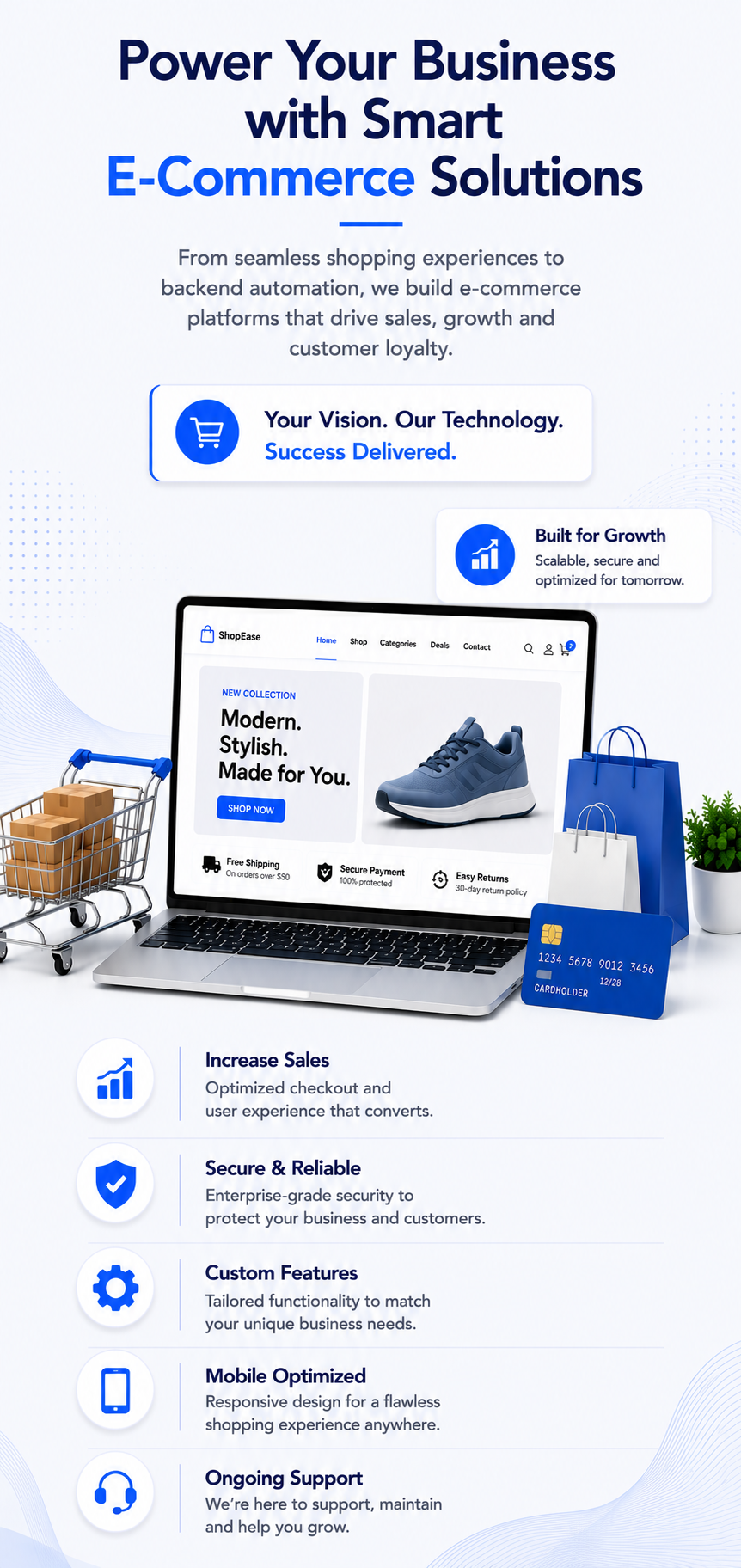
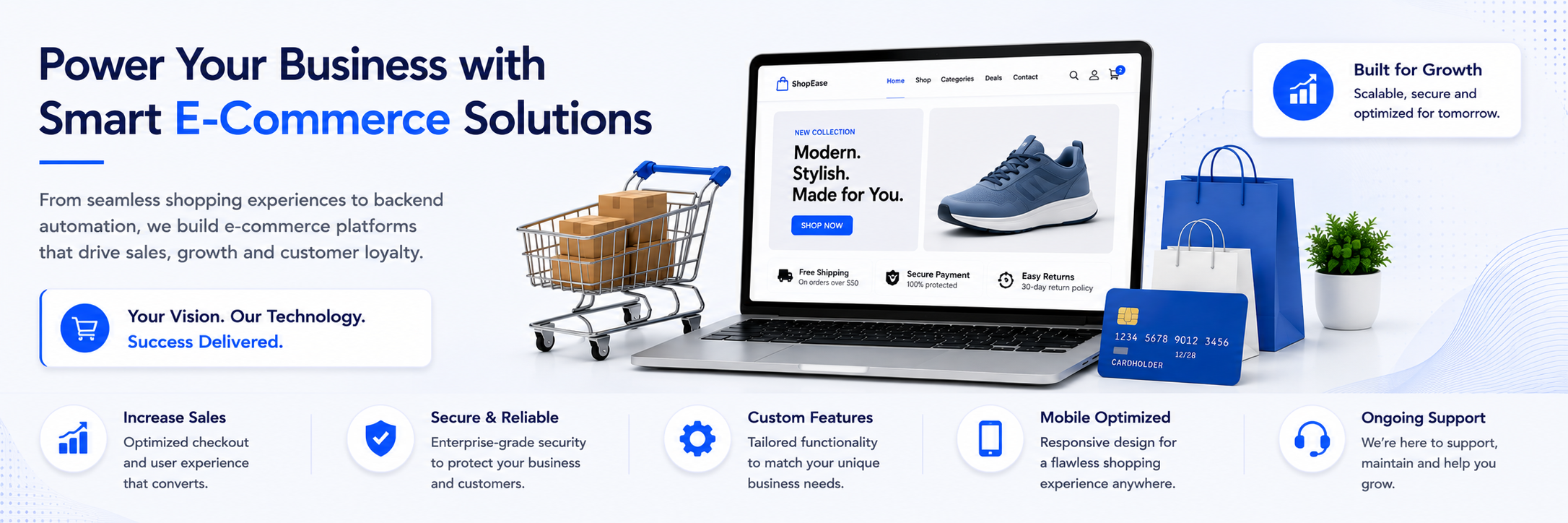
Ahom Technologies has built e-commerce applications for businesses ranging from high-growth startups launching their first digital sales channel to established retailers scaling platforms that serve tens of thousands of daily active users. That range of experience has shaped a development approach built around what actually produces successful e-commerce products — not just functional ones.
Every Ahom e-commerce engagement begins with a discovery phase focused on the specific commercial dynamics of your business — your product catalogue complexity, your inventory management requirements, your payment infrastructure needs, your logistics integrations, and your performance targets at the traffic levels you are planning for. These inputs shape every architecture decision that follows.
Our frontend engineers build e-commerce interfaces optimised for the devices your customers actually use — including mid-range Android devices on variable connectivity — with the performance characteristics that mobile commerce demands. Backend infrastructure is designed for the scale your business needs, with the integration depth to connect reliably with the surrounding systems your operations depend on.
Security is embedded from the architecture level — PCI-compliant payment handling, encrypted data storage, secure API communication, and access control frameworks that protect customer data and transaction records as standard practice rather than as an afterthought.
Post-launch, Ahom provides structured support covering platform maintenance, performance monitoring, conversion optimisation iterations, and the ongoing feature development that keeps your e-commerce platform competitive as your business grows. Our
app development services extend across the full mobile ecosystem — Android, iOS, and cross-platform — ensuring your e-commerce presence performs consistently across every device your customers use.
Full IP ownership transfers to you on project completion. Ahom signs a comprehensive NDA before any project discussions begin. These are the baseline of every engagement we undertake.
5. Industries Beyond Retail That Benefit from E-Commerce Development Thinking
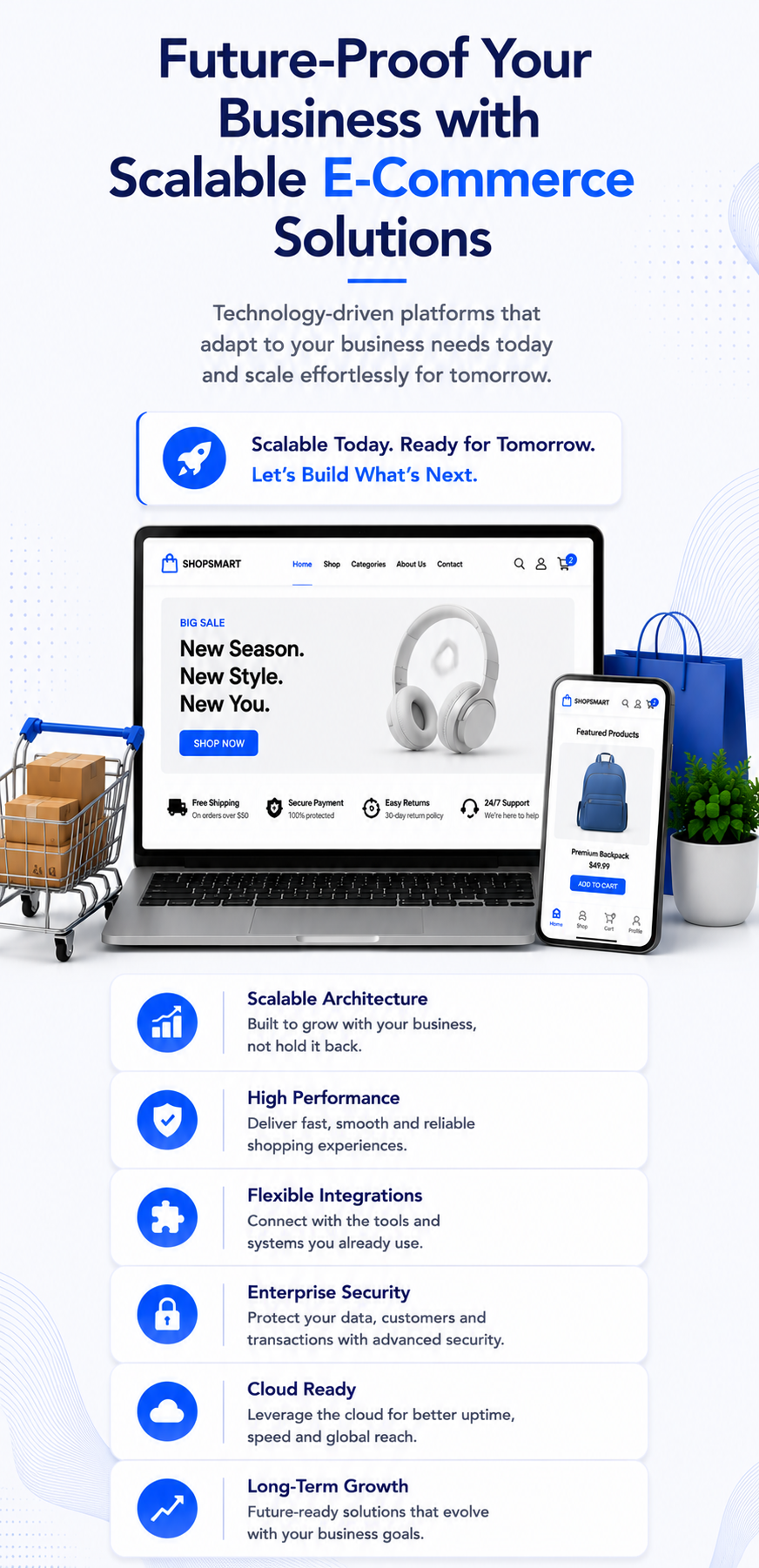
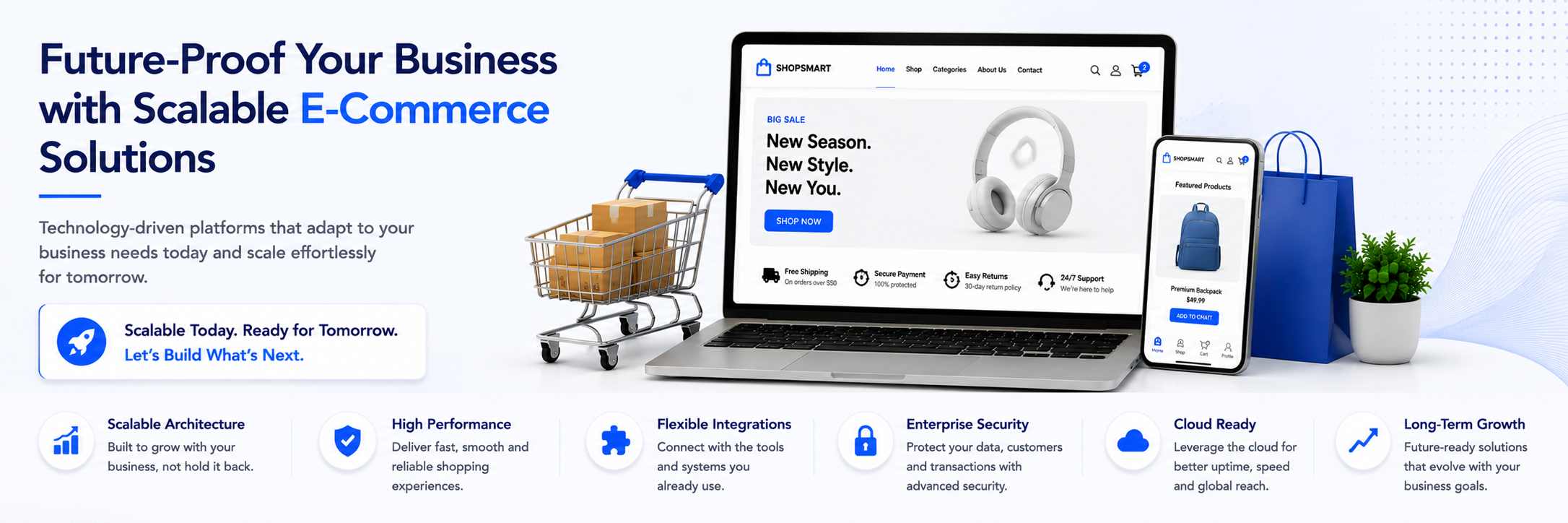
E-commerce development thinking — the combination of conversion focus, performance engineering, integration depth, and security discipline — creates value well beyond traditional retail. Several industries have discovered that applying these principles to their digital platforms produces significantly better outcomes than generic application development approaches.
Healthcare and Pharmaceuticals — Online pharmacy platforms, medical equipment procurement systems, and healthcare service booking applications all benefit from e-commerce-style catalogue architecture, secure payment processing, and real-time inventory management. The compliance requirements add complexity, but the underlying technical approach is directly derived from e-commerce development discipline.
Education and EdTech — Course marketplaces, learning content subscription platforms, and digital certification programmes require the same combination of catalogue management, payment processing, and user account architecture that e-commerce platforms demand — alongside the specific content delivery requirements of educational applications.
Logistics and B2B Trade — B2B procurement platforms, freight booking systems, and supply chain marketplaces are essentially e-commerce applications with more complex pricing logic, approval workflows, and multi-party transaction management. Application development firms with deep e-commerce experience navigate this complexity more effectively than generalist developers.
Real Estate and Property — Property listing platforms with advanced search and filter functionality, virtual tour integrations, and document management workflows share significant architectural DNA with e-commerce applications — particularly in the areas of search performance, media handling, and transaction management.
Food and Beverage — Restaurant ordering platforms, food delivery applications, and catering marketplace products require real-time inventory management, multi-vendor payment splitting, and the performance characteristics of consumer e-commerce applications — delivered at the speed and reliability that food service timelines demand.
Frequently Asked Questions
What makes a specialist e-commerce development company different from a general app developer?
A specialist e-commerce development company understands the specific technical and commercial challenges that e-commerce presents — conversion optimisation, performance at scale, complex integration requirements, payment security, and order management logic. A general app developer may be capable of building something that works but is unlikely to bring the depth of e-commerce-specific experience that produces a platform genuinely competitive in its market.
Should I build on a platform like Shopify or WooCommerce, or go fully custom?
Platform-based solutions work well for businesses with standard catalogue structures, straightforward payment requirements, and limited integration needs. Custom development becomes necessary when your catalogue is large and complex, your integrations are extensive, your performance requirements are demanding, or your business model does not fit the assumptions built into standard e-commerce platforms. Ahom advises on the right approach during the discovery consultation based on your specific situation.
How important is mobile optimisation for an e-commerce platform in India?
Critically important. The majority of e-commerce traffic in India comes through mobile devices — often mid-range Android phones on variable connectivity. An e-commerce platform that performs well on a flagship device but struggles on a three-year-old mid-range Android is not competitive in the Indian market. Mobile performance optimisation is a core engineering discipline at Ahom, not an afterthought.
How does Ahom Technologies handle payment gateway integration?
Ahom integrates with multiple payment gateways – including Razorpay, PayU, Paytm, Stripe, and international card processors – with proper fallback logic, error handling, and PCI-compliant data management. Payment integration planning happens during the discovery phase so the architecture supports all required payment methods from day one rather than being retrofitted later.
Can Ahom build e-commerce platforms for international markets?
Yes. Ahom has built e-commerce platforms for clients targeting Indian domestic markets and international markets across the USA, UK, UAE, and Australia. Multi-currency support, international payment processing, localisation, and the performance requirements of different regional connectivity standards are all areas our team has navigated on live projects.
What does post-launch support for an e-commerce platform look like?
Structured and documented before the project begins – covering platform maintenance, security updates, performance monitoring, bug fixes, and new feature development. For e-commerce specifically, Ahom also provides conversion optimisation support – helping clients iterate on the user flows and features that most directly impact revenue. For businesses also evaluating
best app development companies in India more broadly, our dedicated guide covers the full evaluation framework.
Conclusion
The difference between an e-commerce platform that drives growth and one that quietly constrains it almost always traces back to the depth of the development company that built it. Generic app builders produce generic platforms. E-commerce development companies that understand conversion, scale, integration, and security produce platforms that compete.
Choosing the right partner for your e-commerce development is one of the most consequential technical decisions your business will make. Evaluate carefully – test live applications, assess integration experience, understand the approach to post-launch optimisation, and choose a company whose track record in e-commerce specifically gives you confidence before the project begins.

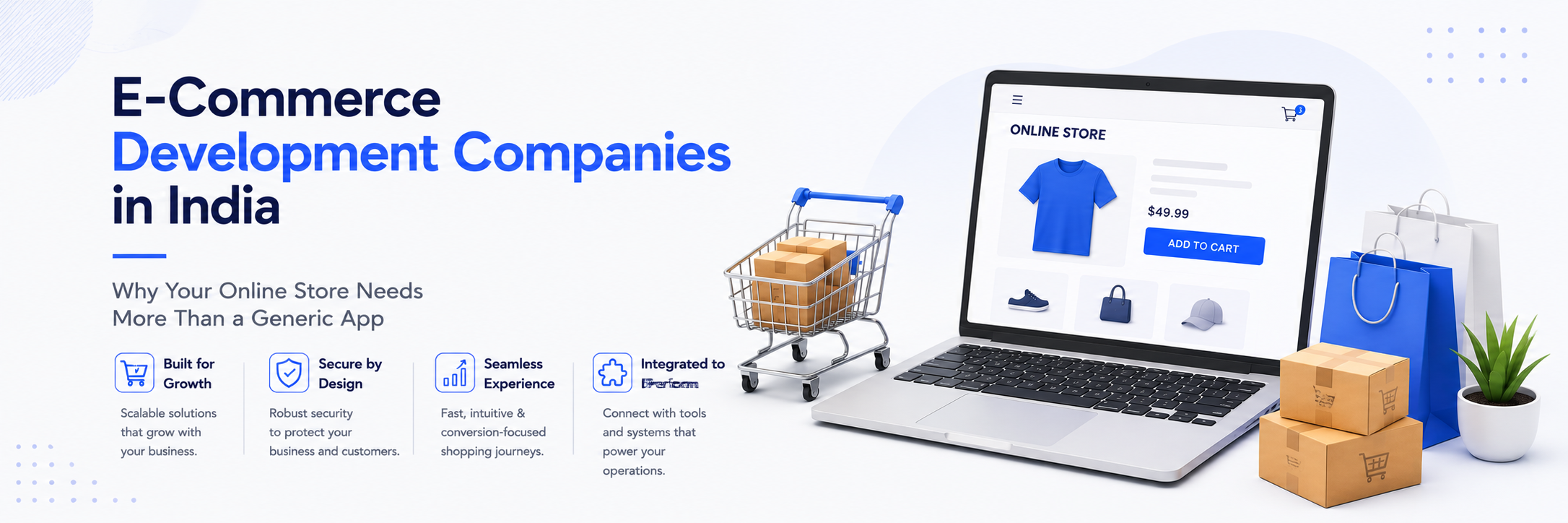
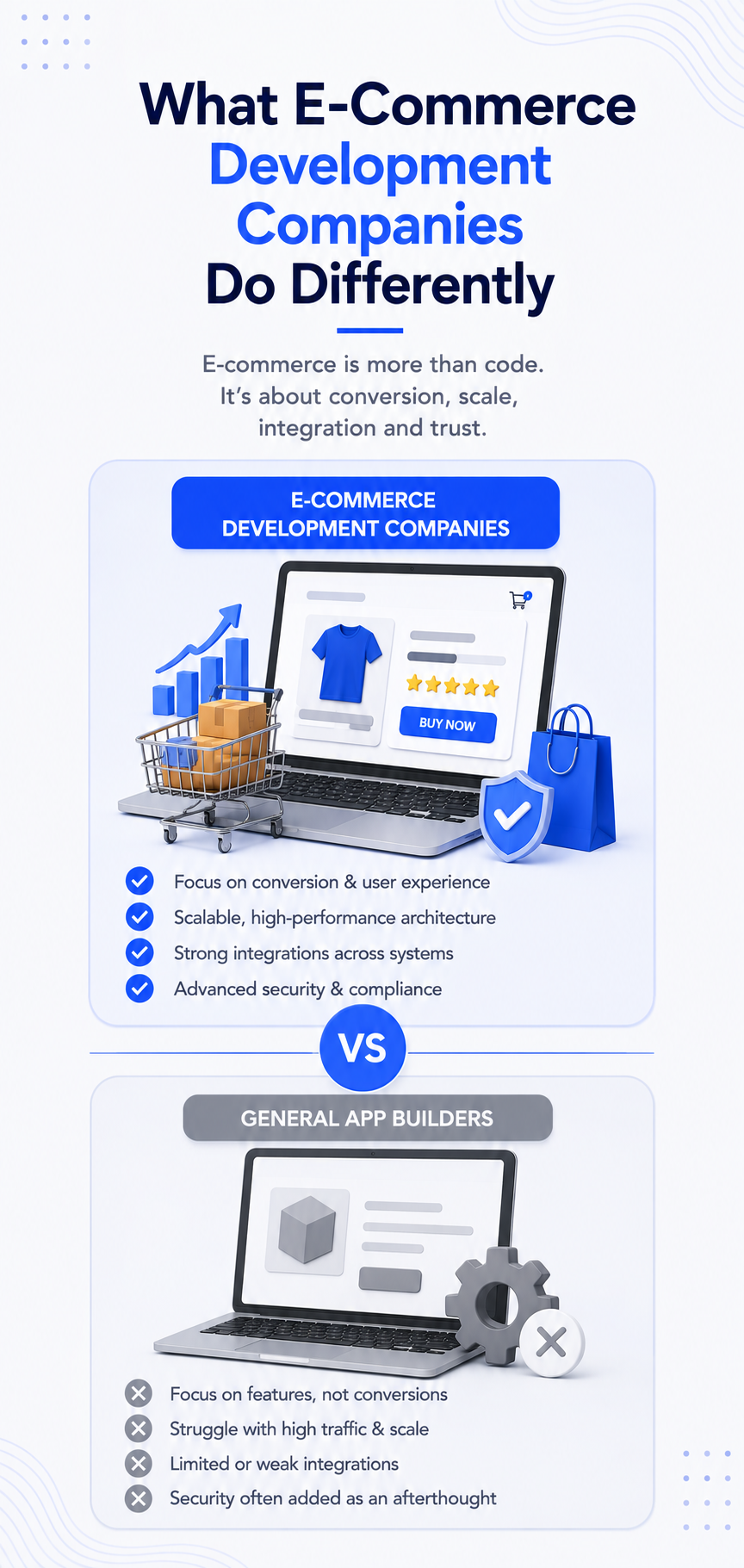
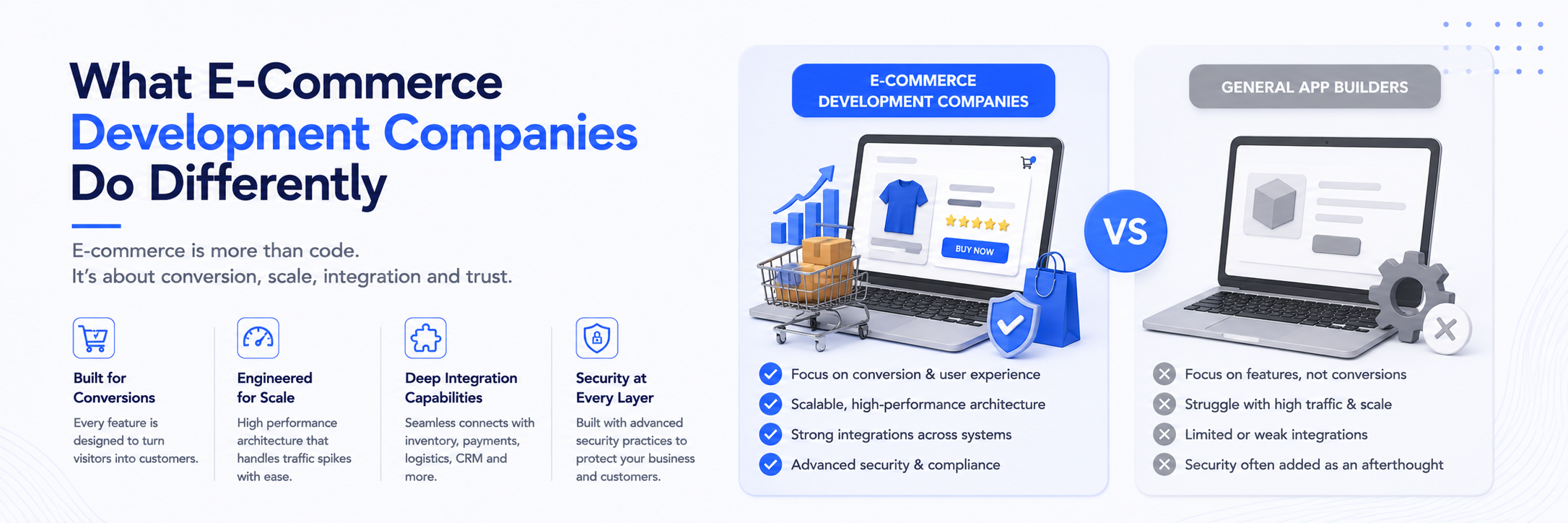 The distinction between a general app development company and a specialist e-commerce development company is not just about platform knowledge. It is about the depth of understanding they bring to the specific technical and commercial challenges that e-commerce presents – challenges that do not exist in other categories of application development.
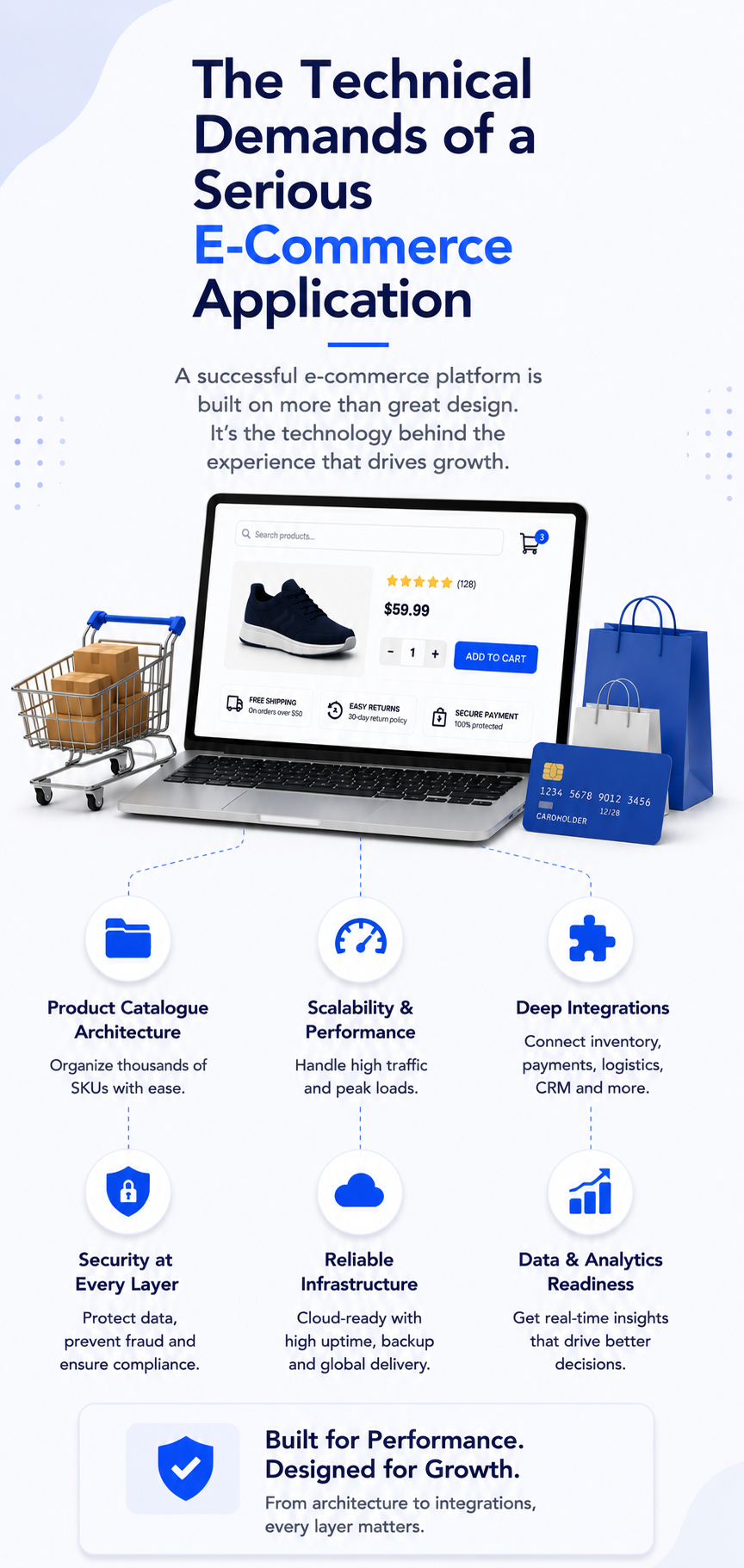
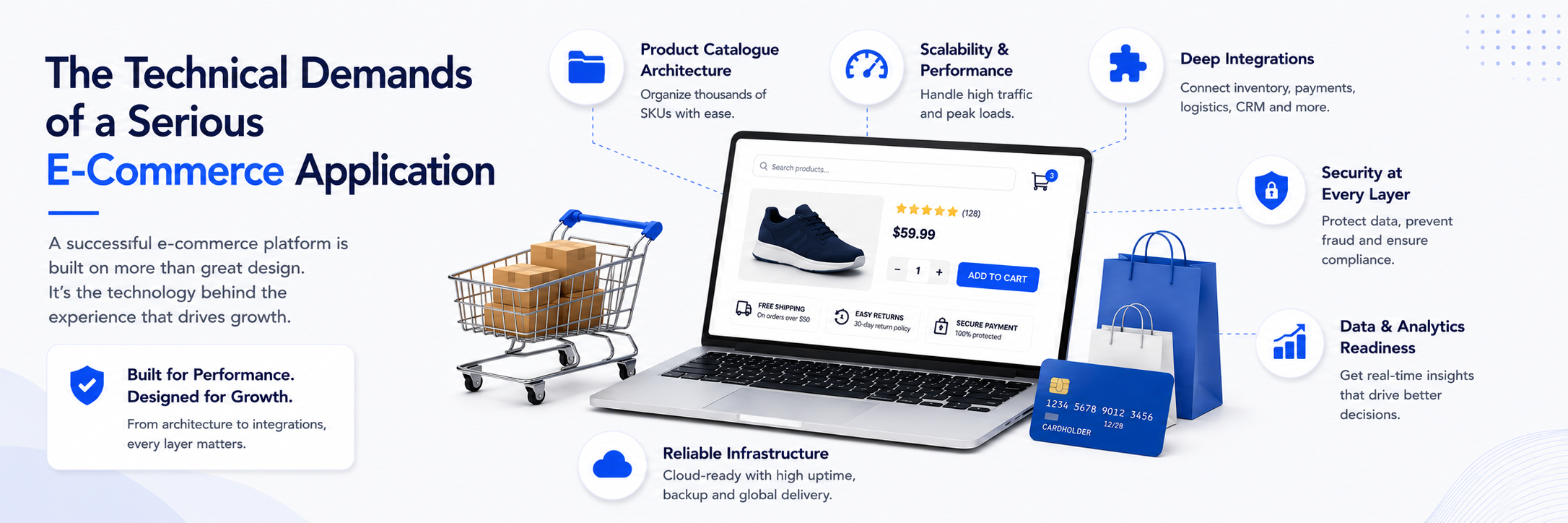 Understanding the technical complexity of a properly built e-commerce platform helps you evaluate whether a development company you are considering is genuinely equipped to deliver it – or whether their experience is primarily with simpler applications that happen to include a shopping cart.
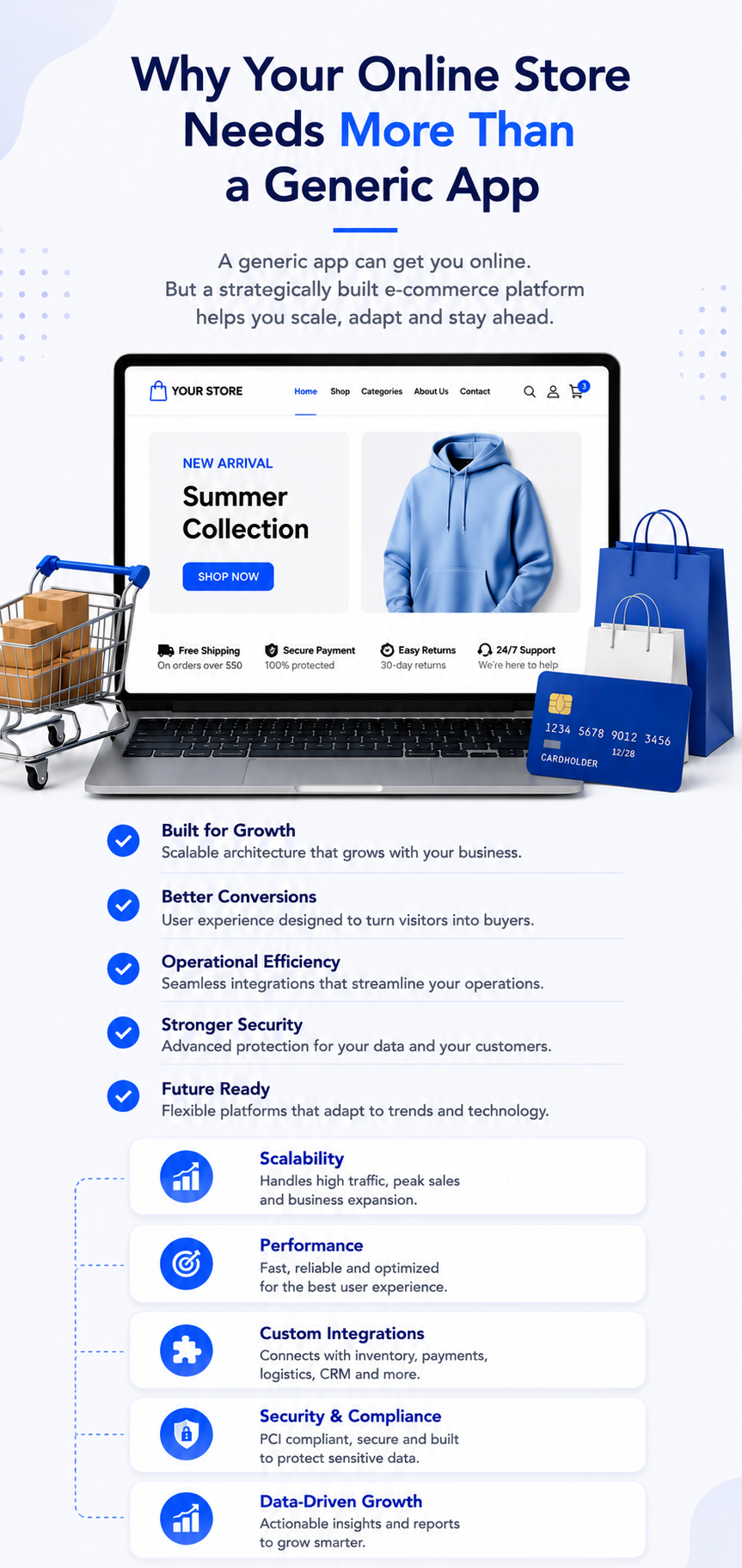
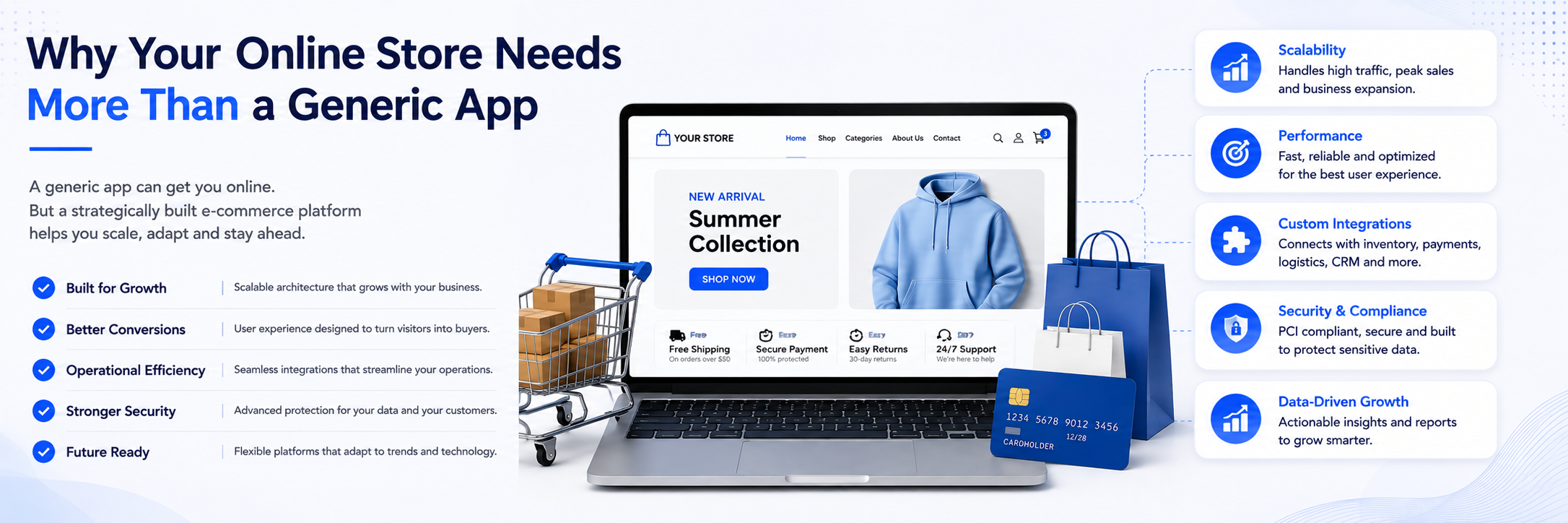 Choosing the wrong e-commerce development partner is one of the most expensive technical decisions a business can make – not just in the immediate project cost but in the rework, lost revenue, and operational disruption that follows a poorly built platform. A structured evaluation process protects you from that outcome.