
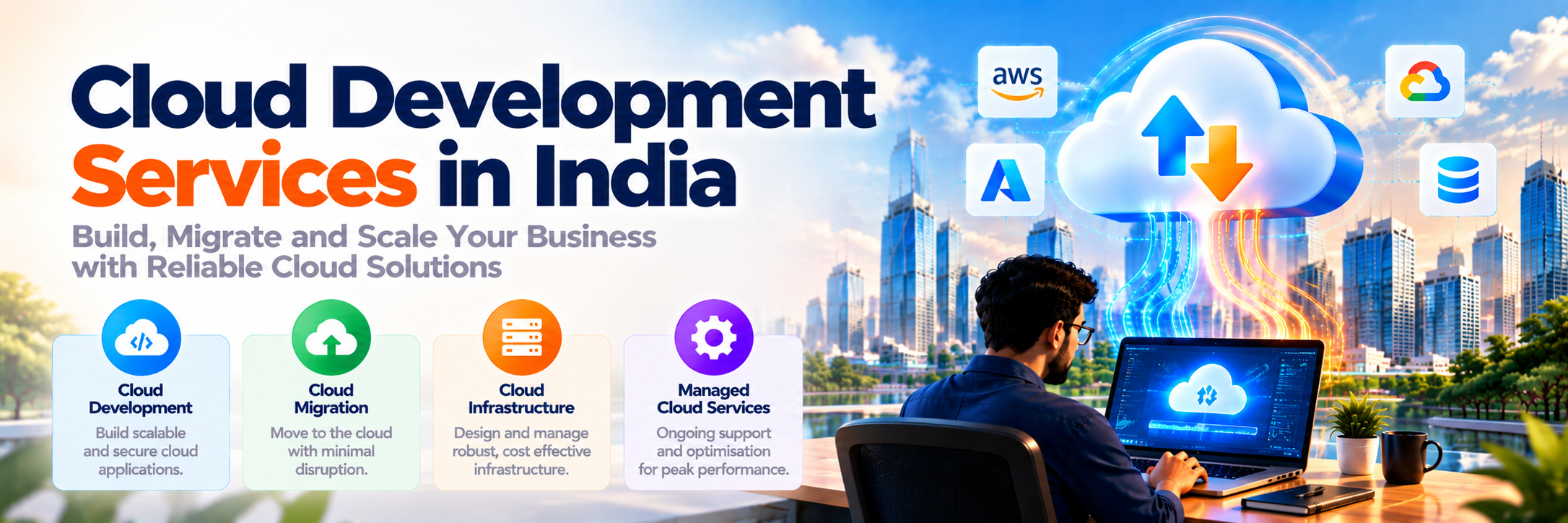
Every technology decision a business makes today happens in the shadow of the cloud. Whether you are building a new application from scratch, migrating a legacy system that has outgrown its on-premise infrastructure, or scaling a platform that worked perfectly at five thousand users and is struggling at five hundred thousand — the cloud is not a background consideration. It is the primary engineering context within which every meaningful software decision is now made.
India has become the world’s most trusted source of cloud development expertise. The combination of deep engineering talent, delivery cultures shaped by decades of international client work, and time zone flexibility that allows real daily collaboration with teams in the US, UK, and UAE has made Indian cloud development services genuinely competitive with the best available anywhere in the world. According to Gartner, cloud spending in India is projected to reach $17.5 billion in 2026 – a 28% increase from 2025 – reflecting the accelerating pace at which Indian enterprises and global businesses with Indian development partners are moving their technology estates to the cloud.
This guide covers what cloud development services actually involve, how to evaluate a provider properly, what platform decisions look like in practice, and how Ahom Technologies approaches every cloud engagement we take on.
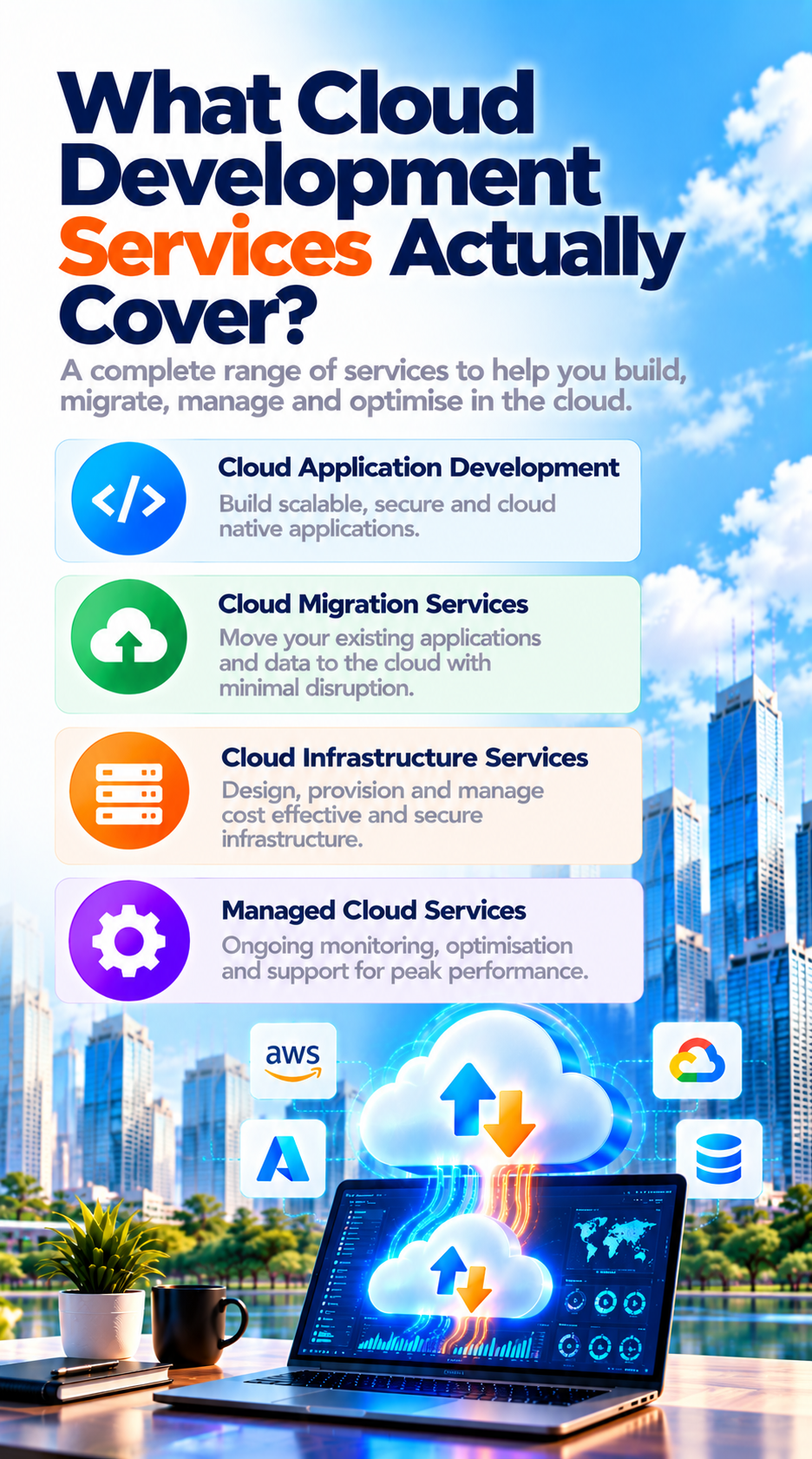
 Cloud development services is a broad term that covers a wide range of distinct disciplines – and understanding what sits inside that term is essential for evaluating whether a provider you are considering is genuinely equipped to help with your specific situation.
At the broadest level, cloud development services covers four distinct capability areas that a serious provider should be able to deliver across all four rather than just one or two.
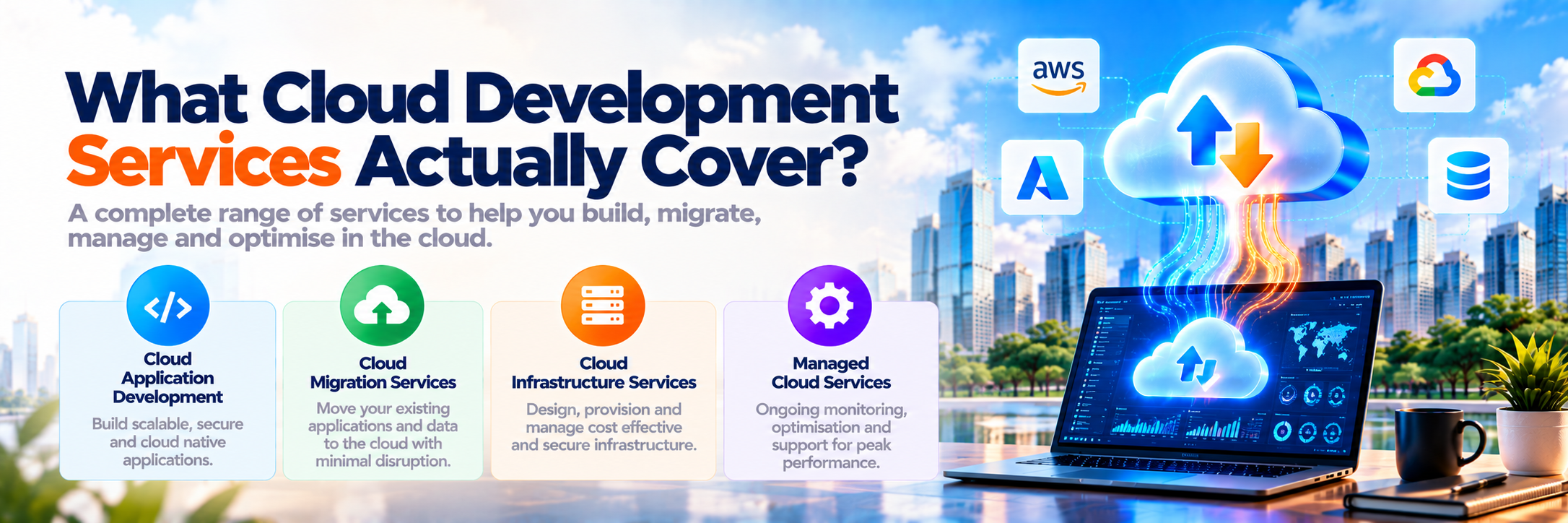
Cloud development services is a broad term that covers a wide range of distinct disciplines – and understanding what sits inside that term is essential for evaluating whether a provider you are considering is genuinely equipped to help with your specific situation.
At the broadest level, cloud development services covers four distinct capability areas that a serious provider should be able to deliver across all four rather than just one or two.
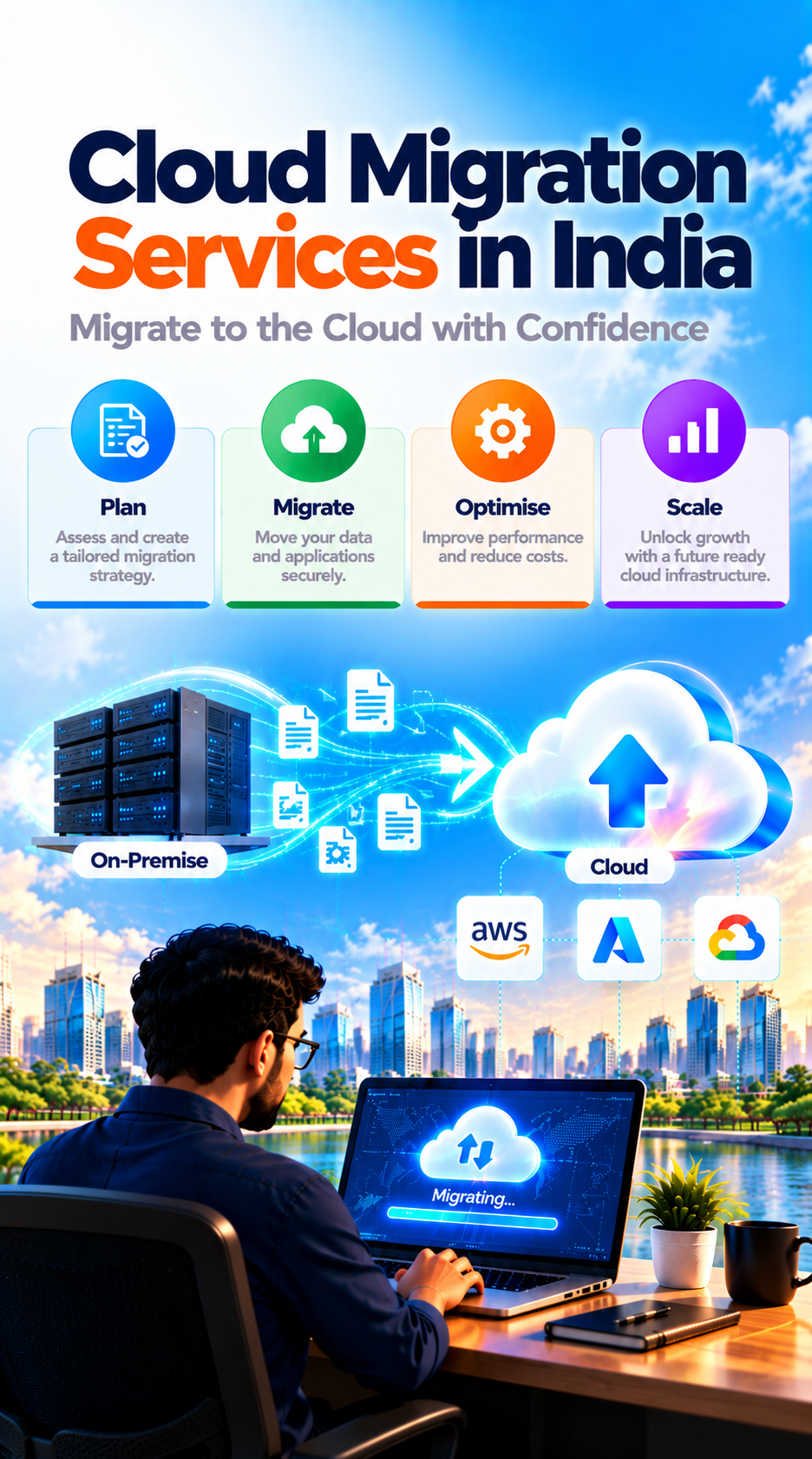
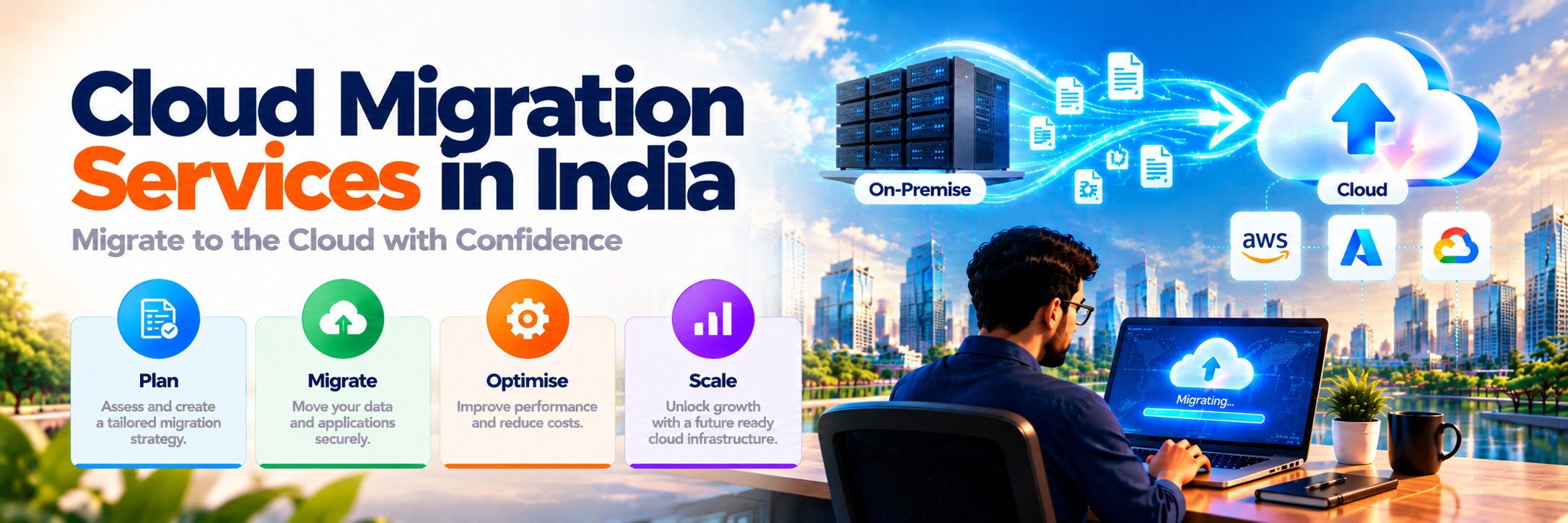 Three terms appear in almost every cloud development conversation – cloud migration, cloud native, and cloud infrastructure – and they are frequently used interchangeably in ways that obscure important differences. Understanding what each one actually means helps you have more productive conversations with potential cloud development partners and make better decisions about what you actually need.
1. What Are Cloud Development Services and What Do They Actually Cover?
Cloud development services is a broad term that covers a wide range of distinct disciplines – and understanding what sits inside that term is essential for evaluating whether a provider you are considering is genuinely equipped to help with your specific situation.
At the broadest level, cloud development services covers four distinct capability areas that a serious provider should be able to deliver across all four rather than just one or two.
Cloud application development
Building applications that are designed to run in the cloud from the beginning – cloud native applications that use managed services, are architected for horizontal scaling, and are instrumented for observability from day one. This is different from taking an existing application and hosting it on a cloud server. Cloud native application development makes deliberate architectural decisions – microservices over monoliths, managed databases over self-managed ones, serverless functions for appropriate workloads, container orchestration for services that need to scale independently – based on the specific characteristics of the application and its expected usage patterns.Cloud migration services
Moving existing applications, data, and infrastructure from on-premise environments or legacy hosting to cloud platforms. This involves discovery and dependency mapping, migration strategy selection for each workload, cloud environment provisioning, migration execution, and post-migration optimisation. Done well, cloud migration unlocks the operational and scalability benefits of cloud platforms for workloads that were built before cloud was the default. Done poorly, it creates a cloud-hosted version of the same problems that existed on-premise – with the added complexity of a new infrastructure management model. Our detailed guide on cloud migration services in India covers the full migration process and strategy framework.Cloud infrastructure services
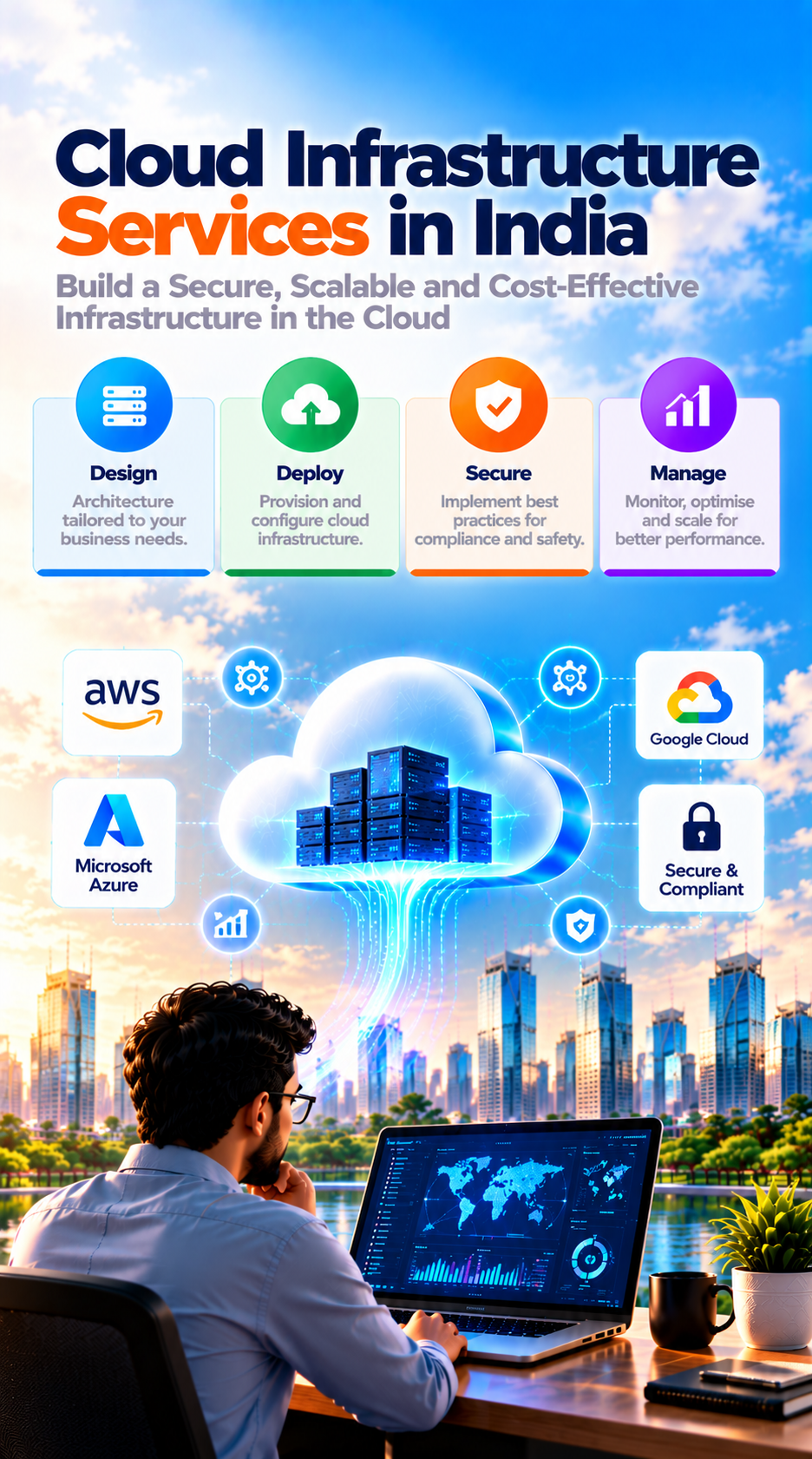
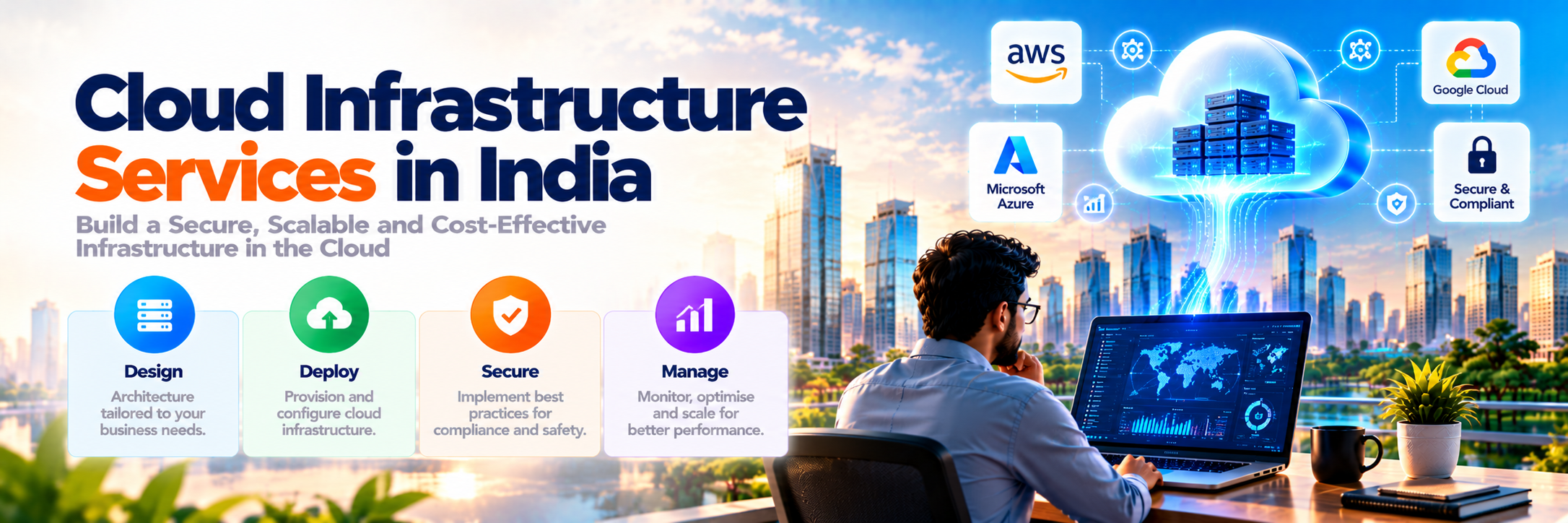
Designing, provisioning, and managing the cloud infrastructure that applications run on – networking, compute, storage, security, identity, and the managed services that reduce operational overhead. Cloud infrastructure management through Infrastructure as Code – treating every cloud resource as version-controlled, reviewable, and reproducible code rather than a manual console configuration – is the practice that separates cloud environments that remain stable and auditable over time from those that accumulate configuration drift and operational risk.Cloud DevOps services
Connecting application development and cloud infrastructure management through automated pipelines, continuous integration and delivery, and the monitoring and observability frameworks that give engineering teams real-time visibility into system behaviour in production. Cloud DevOps is the discipline that makes everything else faster, more reliable, and more operationally efficient. Our guide on cloud DevOps services covers how Ahom combines cloud infrastructure and DevOps automation into a single coherent engineering practice.2. Cloud Migration, Cloud Native and Cloud Infrastructure – Understanding the Difference
Three terms appear in almost every cloud development conversation – cloud migration, cloud native, and cloud infrastructure – and they are frequently used interchangeably in ways that obscure important differences. Understanding what each one actually means helps you have more productive conversations with potential cloud development partners and make better decisions about what you actually need.
Cloud migration
Cloud migration is about existing workloads. It is the process of taking something that currently lives outside the cloud – on a physical server in a data centre, in a co-location facility, on a virtual machine in a private cloud, or in a legacy hosting environment – and moving it to a public cloud platform. The goal is to stop managing physical infrastructure and take advantage of cloud economics, scalability, and managed services. The challenge is doing it without disrupting the applications and users that depend on the workloads being moved.Cloud native development
Cloud native is about new workloads – or existing workloads that have been fundamentally re-architected rather than migrated. A cloud native application is one that was designed specifically for cloud environments – containerised, stateless where possible, designed for horizontal scaling, resilient to individual component failure, and instrumented for the metrics and tracing that cloud-scale observability requires. Cloud native development starts with different assumptions than traditional application development – and produces applications that behave fundamentally differently under load and failure conditions.Cloud infrastructure
Cloud infrastructure is the foundation that both migrated workloads and cloud native applications run on – the virtual networks, compute instances, storage services, managed databases, load balancers, and security configurations that together constitute the environment in which applications operate. Managing cloud infrastructure well – through Infrastructure as Code, proper security configurations, cost management, and performance monitoring – is as important as the application development that runs on top of it. An application built perfectly on poorly managed infrastructure will underperform, accumulate security risk, and generate unpredictable costs.3. Why Businesses in India and Globally Are Moving to Cloud Development
 The business case for cloud development has shifted fundamentally over the past five years. Cloud adoption used to be a cost reduction conversation. It has become an agility and competitive capability conversation – and the businesses that are moving fastest in their markets are almost universally the ones that have built their engineering capability on cloud foundations.
Speed to market
Cloud development removes the infrastructure procurement and provisioning bottleneck that slows on-premise development cycles. A development team that needs a new environment for testing, a new database for a new feature, or additional compute capacity for a load test can have it in minutes rather than weeks. That velocity compounds over time – teams that can experiment faster learn faster, and teams that learn faster build better products.Scalability without capacity planning
On-premise infrastructure requires capacity planning – buying enough hardware to handle peak load, which means paying for unused capacity during normal operation. Cloud infrastructure scales with demand – automatically adding capacity when load increases and releasing it when load decreases. For businesses with variable traffic patterns – e-commerce platforms during sale events, SaaS platforms with growing customer bases, applications with seasonal usage spikes – the ability to scale without advance planning is not a convenience. It is a fundamental operational advantage.Access to managed services
Cloud platforms provide managed versions of the infrastructure components that development teams would otherwise have to build and maintain themselves – managed databases, message queues, caching layers, search services, machine learning platforms, and dozens of other services that would each require dedicated engineering effort to maintain on-premise. Using managed services reduces operational overhead significantly and allows engineering teams to focus on business logic rather than infrastructure management.Global reach
Deploying an application to users in multiple geographic regions – with data centres in each region to minimise latency – is a cloud configuration decision rather than a major infrastructure project. For businesses serving international customers or operating in multiple markets, global cloud deployment provides performance and data residency capabilities that are simply not achievable with on-premise infrastructure at reasonable cost.4. The Cloud Platforms Ahom Works With – AWS, Azure and Google Cloud
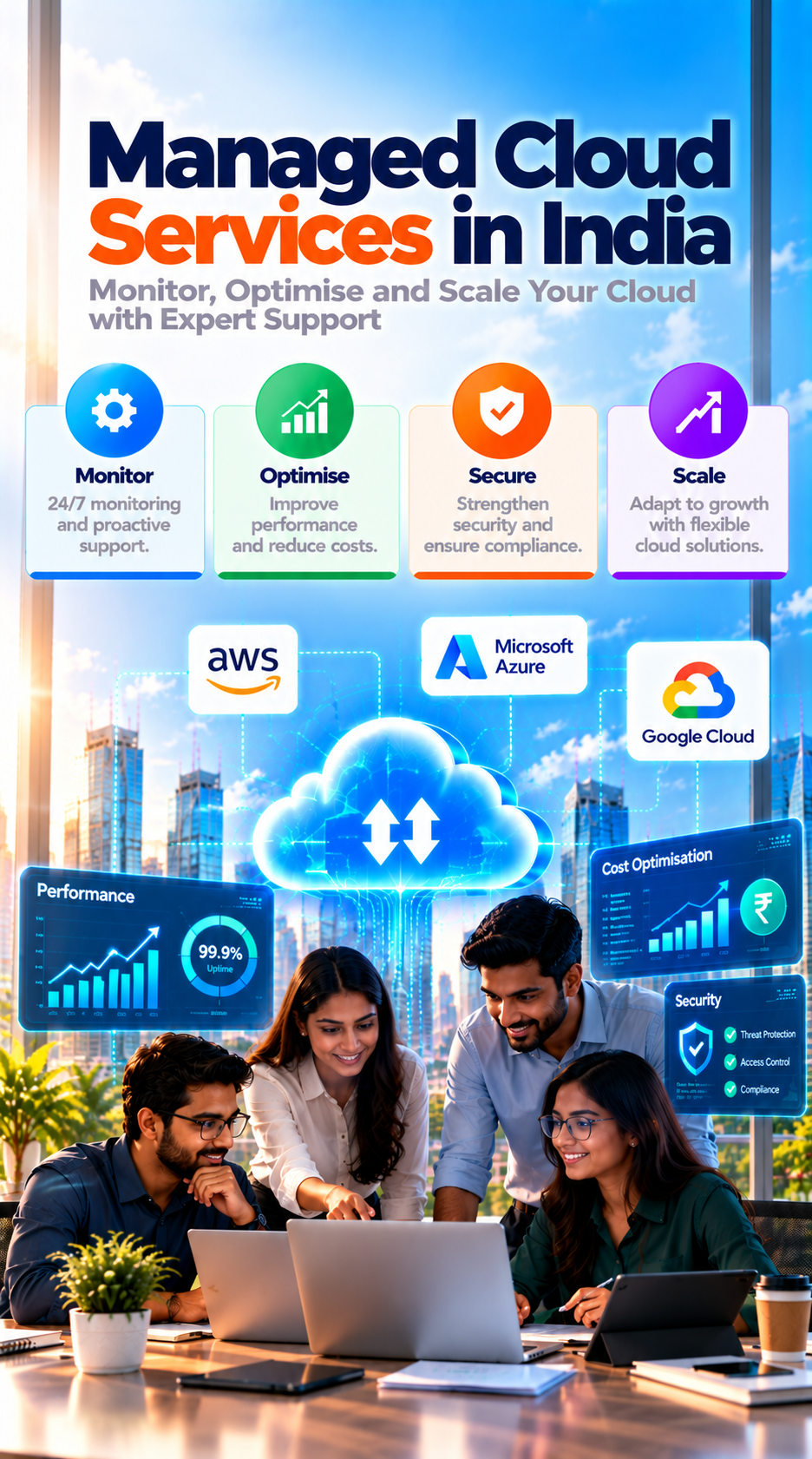
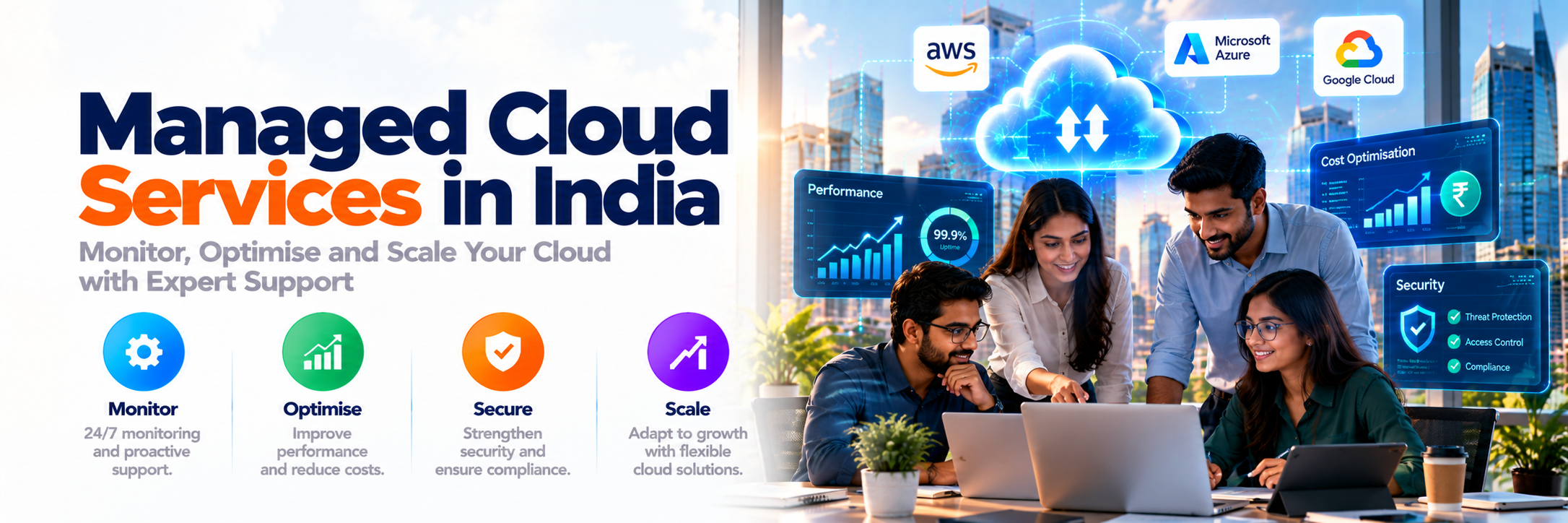 Ahom Technologies develops, migrates, and manages cloud environments across all three major cloud platforms – AWS, Microsoft Azure, and Google Cloud. Platform selection in every engagement is based on your specific workload requirements, your team’s existing familiarity, your compliance requirements, and your long-term cloud strategy – not on a single-platform specialisation that limits your options before the conversation has properly started.
Amazon Web Services
AWS is the most mature and broadly capable cloud platform available. For organisations without a strong existing reason to prefer Azure or Google Cloud, AWS is frequently the strongest default – with the broadest service ecosystem, the most extensive global infrastructure, and the deepest community of certified engineers and tooling partners. Ahom has extensive AWS delivery experience across EC2, EKS, RDS, Lambda, S3, CloudFront, and the full range of AWS managed services – and works with AWS’s cloud development framework as the technical foundation for our AWS engagements.Microsoft Azure
Azure is the strongest choice for organisations in the Microsoft ecosystem – running Windows Server, SQL Server, Active Directory, or Microsoft 365 – where native integration with existing Microsoft infrastructure reduces migration complexity and ongoing management overhead. Azure’s hybrid cloud capabilities, enterprise identity management through Azure Active Directory, and deep integration with DevOps tooling through Azure DevOps make it the platform of choice for enterprise organisations with complex governance requirements and existing Microsoft investments.Google Cloud Platform
Google Cloud is the strongest choice for organisations with significant Kubernetes requirements, data engineering workloads, or machine learning infrastructure. Google Kubernetes Engine is the most mature managed Kubernetes service available. BigQuery provides the most capable managed data warehouse for large-scale analytics. Vertex AI provides an integrated machine learning platform that connects training, deployment, and monitoring in a single managed service. For organisations where Kubernetes, data, or AI capabilities are central to the application architecture, Google Cloud frequently offers the best platform fit.5. Cloud DevOps – How Ahom Combines Cloud and DevOps into One Delivery Framework
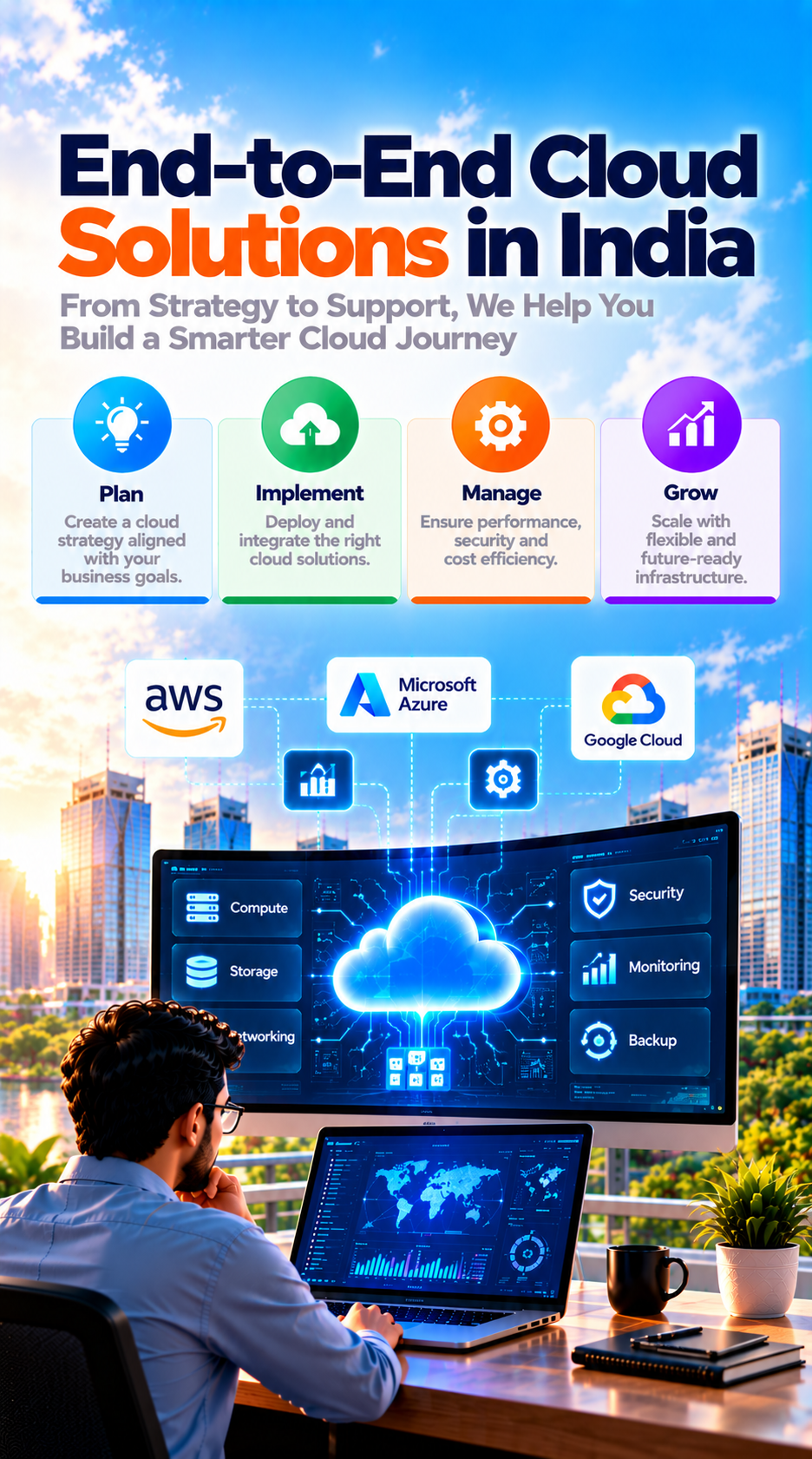
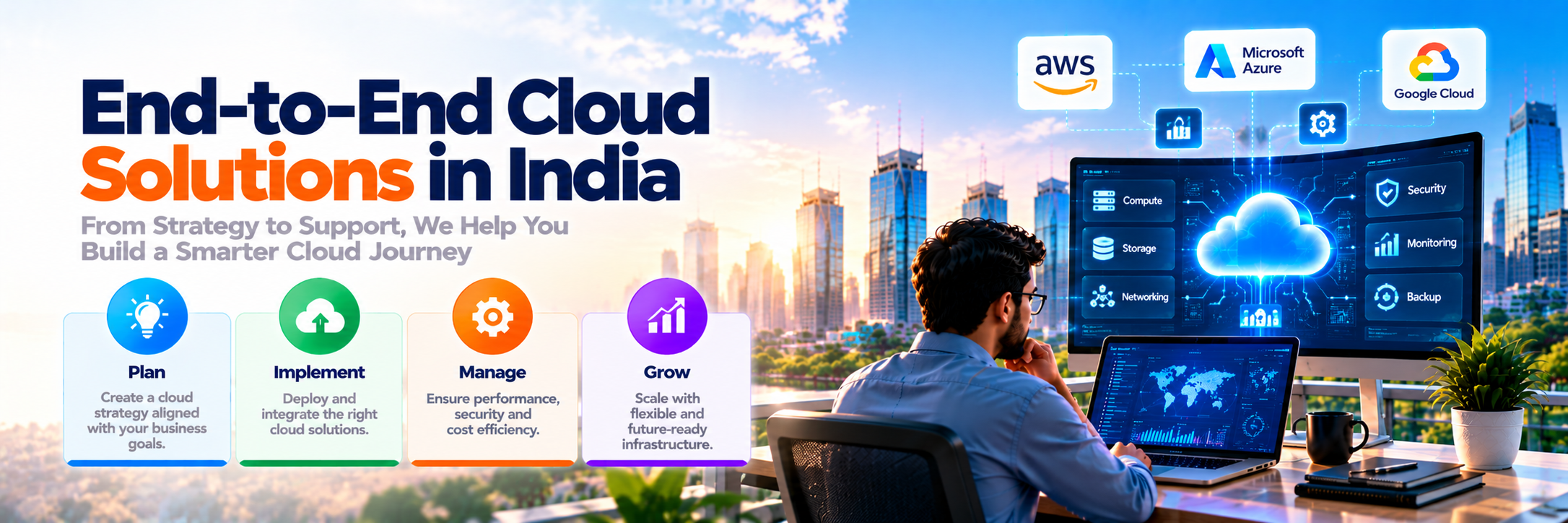 The most common gap in cloud development programmes is the disconnect between the application development team and the cloud infrastructure team – two groups making decisions that affect each other without sufficient coordination, producing environments where the infrastructure was not designed for the applications that run on it and the applications were not designed for the infrastructure they depend on.
Ahom Technologies eliminates this gap by treating cloud development and DevOps as a single integrated discipline rather than two adjacent service lines. Our cloud engineers and DevOps engineers work together from the discovery phase of every engagement – making infrastructure decisions in the context of application requirements and application architecture decisions in the context of infrastructure capabilities.
The most common gap in cloud development programmes is the disconnect between the application development team and the cloud infrastructure team – two groups making decisions that affect each other without sufficient coordination, producing environments where the infrastructure was not designed for the applications that run on it and the applications were not designed for the infrastructure they depend on.
Ahom Technologies eliminates this gap by treating cloud development and DevOps as a single integrated discipline rather than two adjacent service lines. Our cloud engineers and DevOps engineers work together from the discovery phase of every engagement – making infrastructure decisions in the context of application requirements and application architecture decisions in the context of infrastructure capabilities.
Infrastructure as Code from day one
Every cloud environment Ahom provisions is managed through Terraform from the first resource created. There is no manual console configuration that gets codified later – the Infrastructure as Code approach is established at the beginning, which means the environment is reproducible, reviewable, and version-controlled from day one rather than from whenever someone gets around to writing the Terraform after the fact.CI/CD pipelines integrated with cloud infrastructure
The CI/CD pipelines Ahom implements are not separate from the cloud infrastructure – they run on it, deploy to it, and are managed through the same Infrastructure as Code process. Pipeline changes go through the same review and approval process as infrastructure changes. Deployment targets are defined as Infrastructure as Code alongside the applications they serve. This integration means that the deployment pipeline and the infrastructure it runs on evolve together rather than drifting apart over time. For businesses evaluating their DevOps services in India requirements alongside their cloud development needs, Ahom provides both capabilities through the same engagement model – eliminating the coordination overhead of managing separate cloud and DevOps partners.6. Cloud Migration Services – How Ahom Moves Businesses to the Cloud Safely
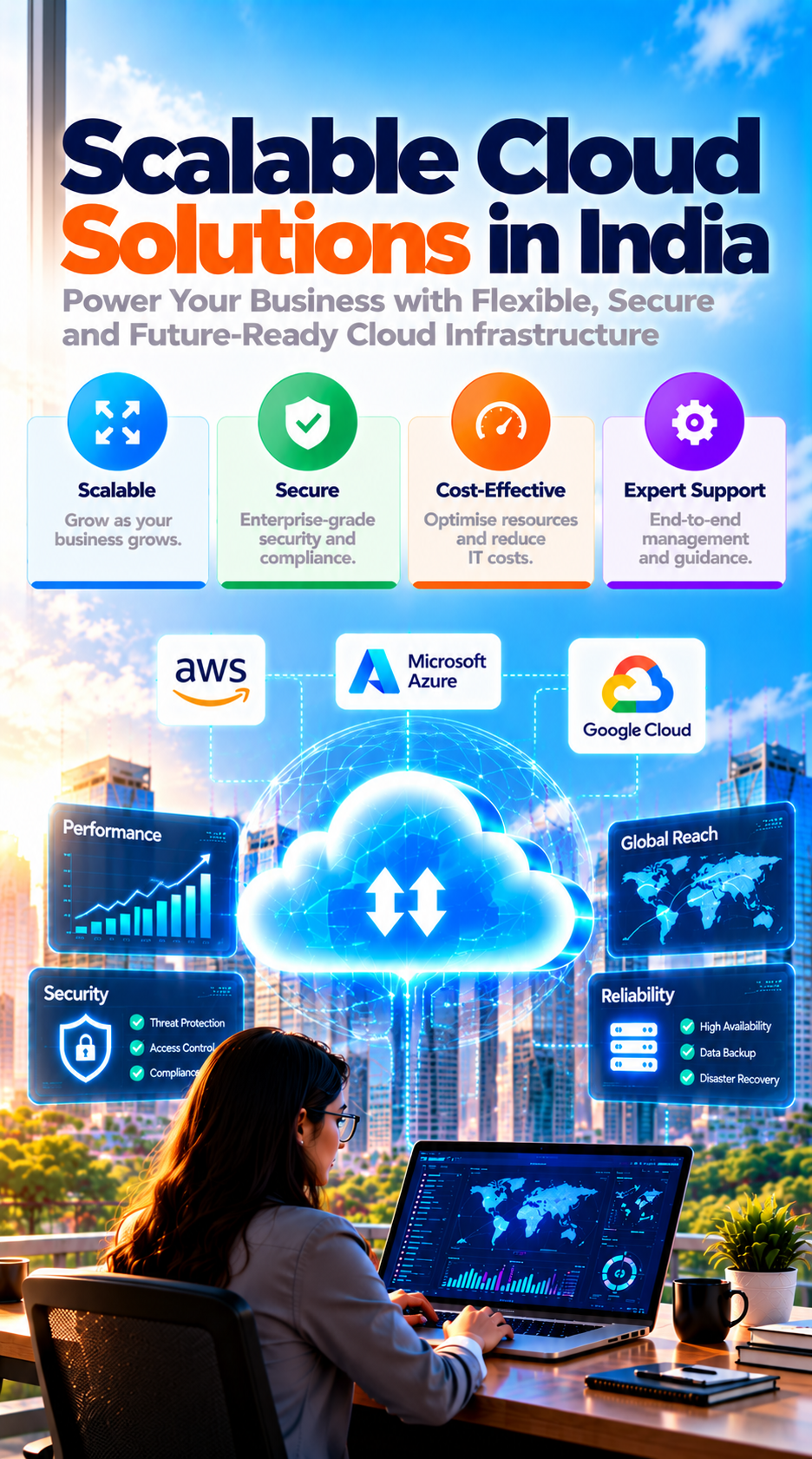
 Cloud migration is where the gap between good planning and poor planning becomes most visible – and most expensive. A well-planned migration moves production workloads to the cloud without extended disruption, validates performance against pre-migration baselines, and leaves the migrated environment better instrumented and better managed than what it replaced. A poorly planned migration creates a cloud-hosted version of the same operational problems that existed on-premise, with the added complexity of unfamiliar infrastructure.
Ahom’s cloud migration approach begins with a thorough discovery and dependency mapping phase – cataloguing every workload, every integration, and every dependency relationship in scope before recommending a migration sequence or a strategy for any individual application. This investment in upfront mapping is what prevents the sequencing errors that disrupt migrations when applications that depend on each other move in the wrong order.
Migration execution runs wave by wave – with each wave tested and validated before the next begins, rollback procedures prepared in advance rather than improvised, and the on-premise environment maintained in parallel until each migrated workload has been stable in production for a defined validation period. Post-migration optimisation – right-sizing cloud resources, tuning auto-scaling, implementing cost monitoring – runs after each wave completes rather than being deferred to the end of the programme.
The full detail of how Ahom structures cloud migration engagements – including the six migration strategies, the platform selection framework, and the hybrid cloud approach for organisations that cannot move everything at once – is covered in our dedicated guide to cloud migration services in India.
Cloud migration is where the gap between good planning and poor planning becomes most visible – and most expensive. A well-planned migration moves production workloads to the cloud without extended disruption, validates performance against pre-migration baselines, and leaves the migrated environment better instrumented and better managed than what it replaced. A poorly planned migration creates a cloud-hosted version of the same operational problems that existed on-premise, with the added complexity of unfamiliar infrastructure.
Ahom’s cloud migration approach begins with a thorough discovery and dependency mapping phase – cataloguing every workload, every integration, and every dependency relationship in scope before recommending a migration sequence or a strategy for any individual application. This investment in upfront mapping is what prevents the sequencing errors that disrupt migrations when applications that depend on each other move in the wrong order.
Migration execution runs wave by wave – with each wave tested and validated before the next begins, rollback procedures prepared in advance rather than improvised, and the on-premise environment maintained in parallel until each migrated workload has been stable in production for a defined validation period. Post-migration optimisation – right-sizing cloud resources, tuning auto-scaling, implementing cost monitoring – runs after each wave completes rather than being deferred to the end of the programme.
The full detail of how Ahom structures cloud migration engagements – including the six migration strategies, the platform selection framework, and the hybrid cloud approach for organisations that cannot move everything at once – is covered in our dedicated guide to cloud migration services in India.
7. Managed Cloud Services – What Ahom Provides After Your Cloud Is Live
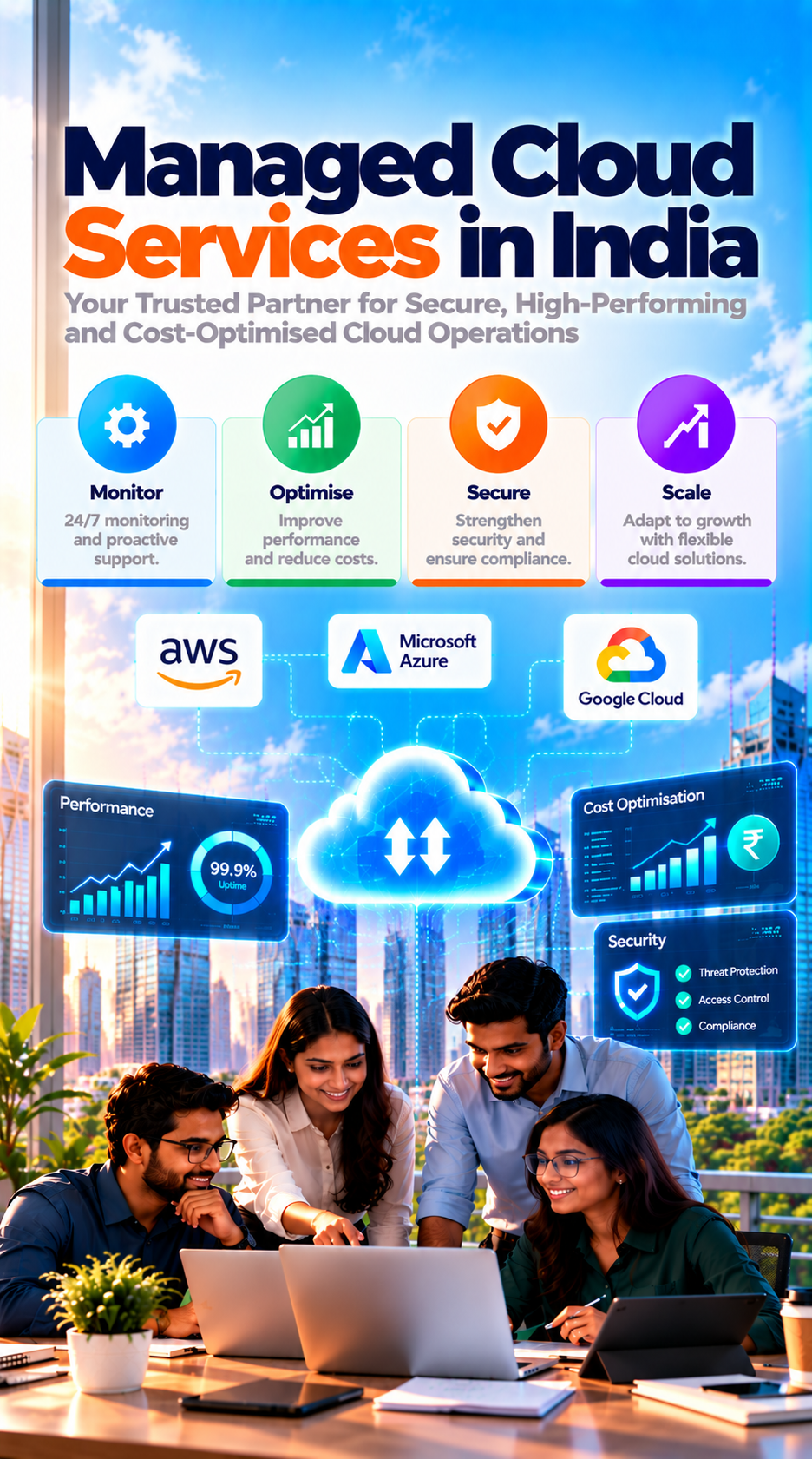
 Going live on the cloud is the beginning of the operational relationship, not the end of the delivery relationship. Cloud environments require ongoing management – and the quality of that ongoing management determines whether the cloud investment continues to deliver value or gradually accumulates the operational debt that makes the environment expensive to maintain and risky to change.
Ahom’s managed cloud services cover the full scope of ongoing cloud operations – so that your engineering team can focus on building products rather than managing infrastructure.
Going live on the cloud is the beginning of the operational relationship, not the end of the delivery relationship. Cloud environments require ongoing management – and the quality of that ongoing management determines whether the cloud investment continues to deliver value or gradually accumulates the operational debt that makes the environment expensive to maintain and risky to change.
Ahom’s managed cloud services cover the full scope of ongoing cloud operations – so that your engineering team can focus on building products rather than managing infrastructure.
Cost management and optimisation
Cloud costs without active management grow in ways that are difficult to predict and easy to miss. Reserved instance management, rightsizing recommendations based on actual usage patterns, cost anomaly alerting, resource tagging and chargeback reporting, and regular cost reviews that surface optimisation opportunities – these are the disciplines that keep cloud costs aligned with cloud value rather than growing unchecked as the environment evolves.Security management
Cloud security requires continuous attention – vulnerability scanning, patch management, access control review, compliance monitoring, and security incident response. Ahom’s managed cloud security practice covers all of these disciplines as a structured ongoing engagement rather than a periodic audit – because security posture that is only reviewed quarterly will have accumulated significant risk before anyone looks at it.Performance monitoring and optimisation
Real-world usage patterns reveal performance characteristics that are impossible to fully anticipate during development. Ahom’s managed cloud monitoring – using Prometheus, Grafana, and cloud-native monitoring tools – provides continuous visibility into application and infrastructure performance, with alerting that surfaces issues before they affect users and optimisation recommendations that improve performance and reliability over time.Platform updates and maintenance
Cloud platforms release updates continuously – new service features, deprecations of existing APIs, security patches, and runtime updates that affect the applications running on them. Managing these updates without disrupting production requires a structured approach to testing, staging environment validation, and controlled rollout. Ahom’s managed cloud maintenance covers this ongoing update management so that your cloud environment stays current without the operational risk of unmanaged change.8. Industries Ahom Serves Through Cloud Development Services
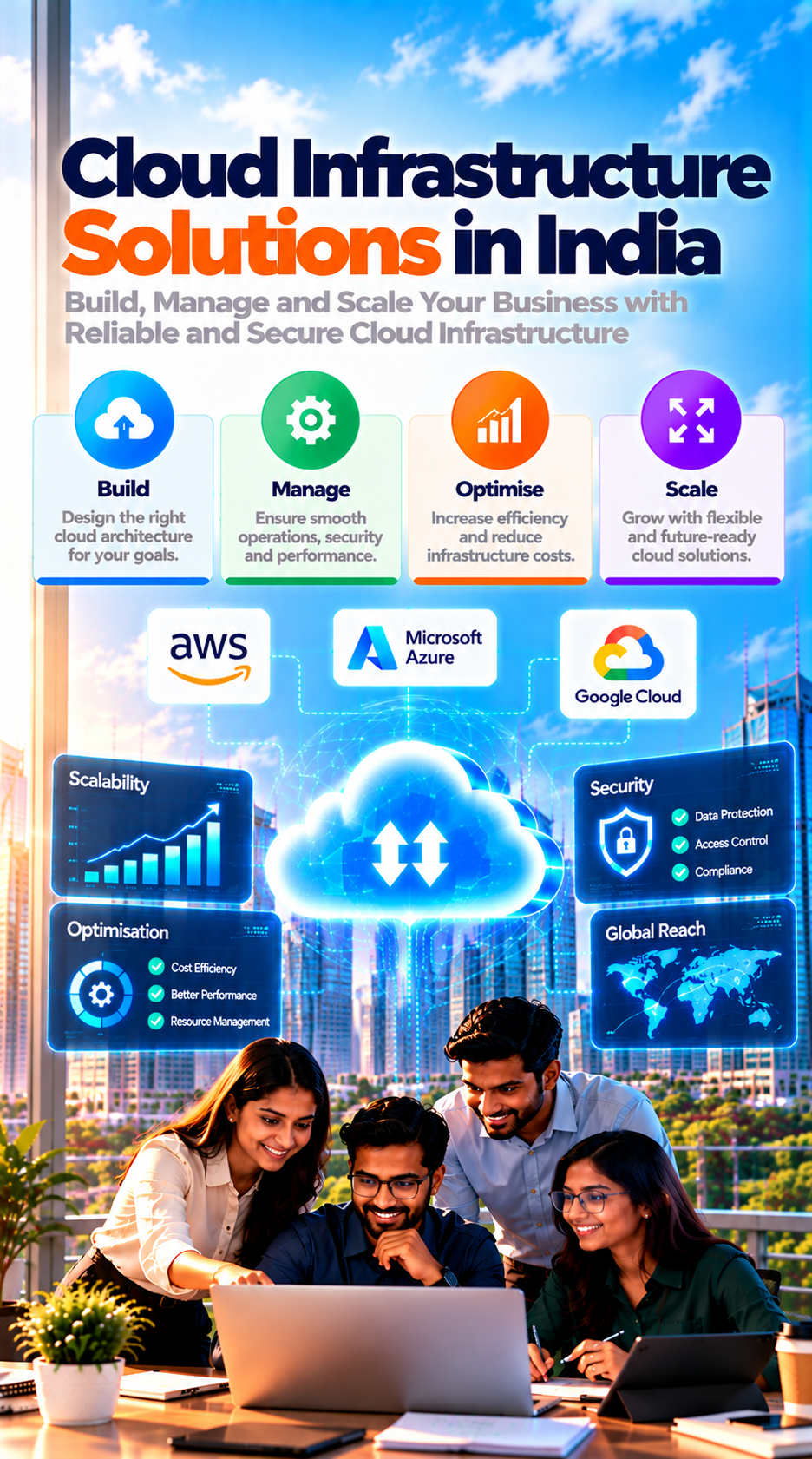
 Ahom Technologies has delivered cloud development services across a wide range of industries – and in each sector, the domain-specific requirements have shaped both the cloud architecture decisions and the migration approach used.
Healthcare – Healthcare cloud environments require the highest standards of data security, access control, and audit logging – with encryption at rest and in transit, role-based access controls aligned to clinical data sensitivity classifications, and the monitoring frameworks that compliance validation requires. Ahom has built and migrated healthcare cloud environments on AWS and Azure with HIPAA-aligned security configurations and the operational monitoring that clinical data management demands.
Fintech and Banking – Financial services cloud environments require PCI DSS compliance for payment data, strict network segmentation, comprehensive audit trails, and the reliability engineering that zero-downtime financial applications demand. Ahom has built fintech cloud environments with multi-region deployment for high availability, automated compliance monitoring, and the security controls that financial regulatory frameworks require.
E-Commerce and Retail – E-commerce cloud environments need to handle traffic spikes during sale events without performance degradation – which requires auto-scaling configurations tested under realistic load, CDN deployment for global performance, and the database architecture that high-concurrent-read workloads demand. Ahom has built and migrated e-commerce cloud environments for platforms handling significant daily transaction volumes across multiple markets.
Logistics and Supply Chain – Logistics cloud environments typically have the most complex integration landscapes – connecting to fleet management systems, warehouse management software, carrier APIs, and ERP systems. Ahom has built cloud environments for logistics operators that manage these integration complexities through event-driven architectures, message queue infrastructure, and the real-time monitoring that supply chain operations require.
SaaS and Technology Companies – SaaS cloud environments require multi-tenant architecture, per-tenant data isolation, and the scaling infrastructure that supports growth from hundreds to tens of thousands of customers without re-architecture. Ahom has built SaaS cloud environments with tenant-aware deployment pipelines, per-tenant monitoring, and the cost allocation frameworks that SaaS unit economics require.
Ahom Technologies has delivered cloud development services across a wide range of industries – and in each sector, the domain-specific requirements have shaped both the cloud architecture decisions and the migration approach used.
Healthcare – Healthcare cloud environments require the highest standards of data security, access control, and audit logging – with encryption at rest and in transit, role-based access controls aligned to clinical data sensitivity classifications, and the monitoring frameworks that compliance validation requires. Ahom has built and migrated healthcare cloud environments on AWS and Azure with HIPAA-aligned security configurations and the operational monitoring that clinical data management demands.
Fintech and Banking – Financial services cloud environments require PCI DSS compliance for payment data, strict network segmentation, comprehensive audit trails, and the reliability engineering that zero-downtime financial applications demand. Ahom has built fintech cloud environments with multi-region deployment for high availability, automated compliance monitoring, and the security controls that financial regulatory frameworks require.
E-Commerce and Retail – E-commerce cloud environments need to handle traffic spikes during sale events without performance degradation – which requires auto-scaling configurations tested under realistic load, CDN deployment for global performance, and the database architecture that high-concurrent-read workloads demand. Ahom has built and migrated e-commerce cloud environments for platforms handling significant daily transaction volumes across multiple markets.
Logistics and Supply Chain – Logistics cloud environments typically have the most complex integration landscapes – connecting to fleet management systems, warehouse management software, carrier APIs, and ERP systems. Ahom has built cloud environments for logistics operators that manage these integration complexities through event-driven architectures, message queue infrastructure, and the real-time monitoring that supply chain operations require.
SaaS and Technology Companies – SaaS cloud environments require multi-tenant architecture, per-tenant data isolation, and the scaling infrastructure that supports growth from hundreds to tens of thousands of customers without re-architecture. Ahom has built SaaS cloud environments with tenant-aware deployment pipelines, per-tenant monitoring, and the cost allocation frameworks that SaaS unit economics require.
9. How to Get Started with Ahom’s Cloud Development Services
 Getting started with Ahom Technologies is a straightforward process designed around understanding your specific situation before making any recommendations. Cloud development decisions – platform selection, migration strategy, architecture approach – that are made without a thorough understanding of your current state and your target requirements produce solutions that fit a generic client rather than your actual situation.
Every Ahom cloud development engagement begins with a structured discovery conversation – mapping your current technology estate, your application portfolio, your team’s existing cloud capability, your compliance requirements, and your business objectives for the cloud programme. This conversation is the foundation for every technical recommendation that follows.
From the discovery conversation, Ahom produces a cloud development roadmap – a prioritised, sequenced plan that identifies the highest-impact initiatives first and sequences subsequent work in a way that builds capability progressively rather than attempting to change everything simultaneously. Whether you are starting a new cloud native application build, planning a cloud migration programme, or looking for ongoing managed cloud services, the roadmap gives you a clear picture of what the engagement will involve before any work begins.
For businesses evaluating a DevOps company in India alongside their cloud development requirements, Ahom provides both capabilities through the same engagement model – with cloud development and DevOps treated as the integrated discipline they are rather than two separate service lines managed by different teams.
Reach out through Ahom’s website, by email, or by phone. Share a brief overview of your cloud development requirements. You will hear back from our team within one business day.
Getting started with Ahom Technologies is a straightforward process designed around understanding your specific situation before making any recommendations. Cloud development decisions – platform selection, migration strategy, architecture approach – that are made without a thorough understanding of your current state and your target requirements produce solutions that fit a generic client rather than your actual situation.
Every Ahom cloud development engagement begins with a structured discovery conversation – mapping your current technology estate, your application portfolio, your team’s existing cloud capability, your compliance requirements, and your business objectives for the cloud programme. This conversation is the foundation for every technical recommendation that follows.
From the discovery conversation, Ahom produces a cloud development roadmap – a prioritised, sequenced plan that identifies the highest-impact initiatives first and sequences subsequent work in a way that builds capability progressively rather than attempting to change everything simultaneously. Whether you are starting a new cloud native application build, planning a cloud migration programme, or looking for ongoing managed cloud services, the roadmap gives you a clear picture of what the engagement will involve before any work begins.
For businesses evaluating a DevOps company in India alongside their cloud development requirements, Ahom provides both capabilities through the same engagement model – with cloud development and DevOps treated as the integrated discipline they are rather than two separate service lines managed by different teams.
Reach out through Ahom’s website, by email, or by phone. Share a brief overview of your cloud development requirements. You will hear back from our team within one business day.