3. CI/CD Pipelines, Automation and IaC – The Three Pillars of Real DevOps Services
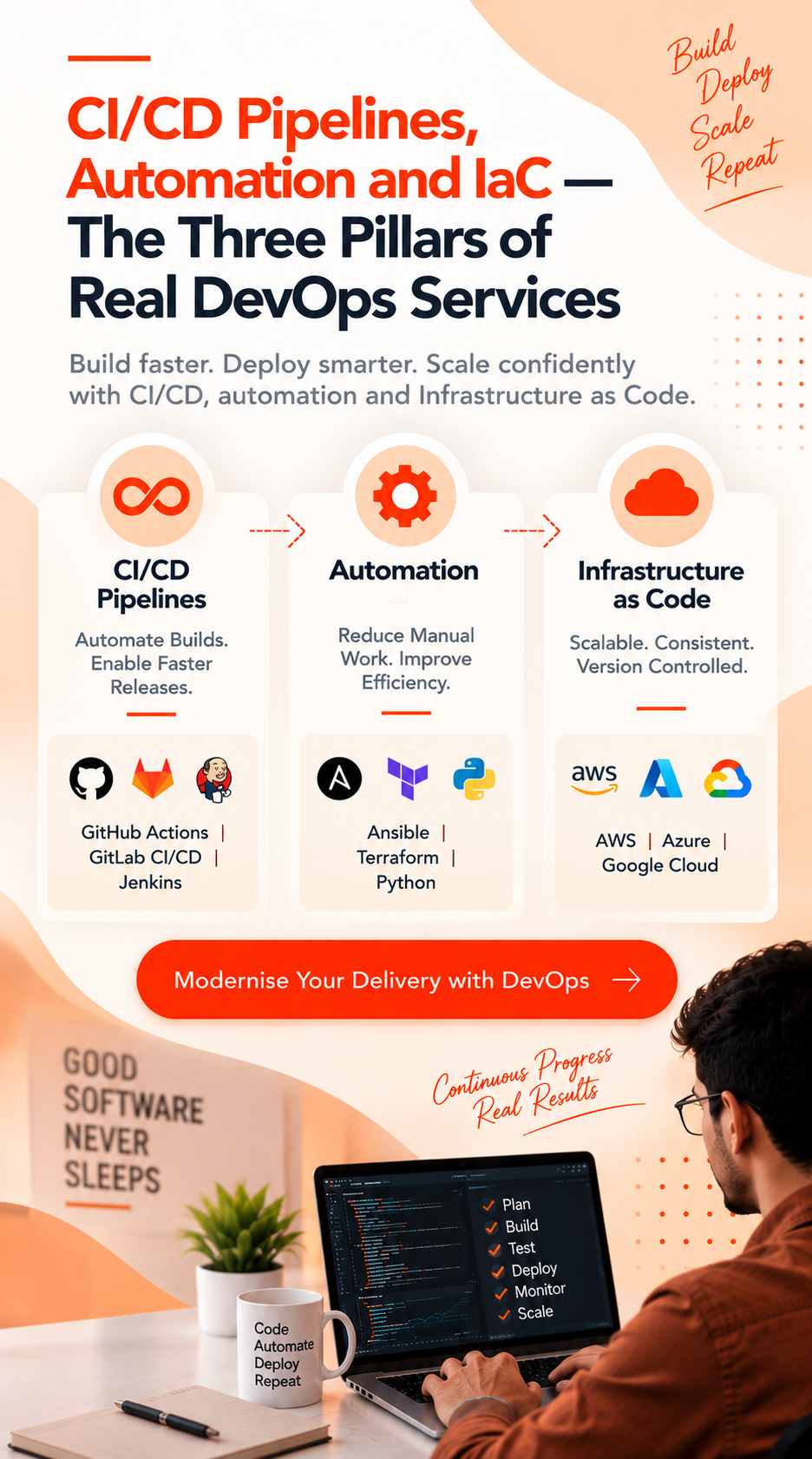
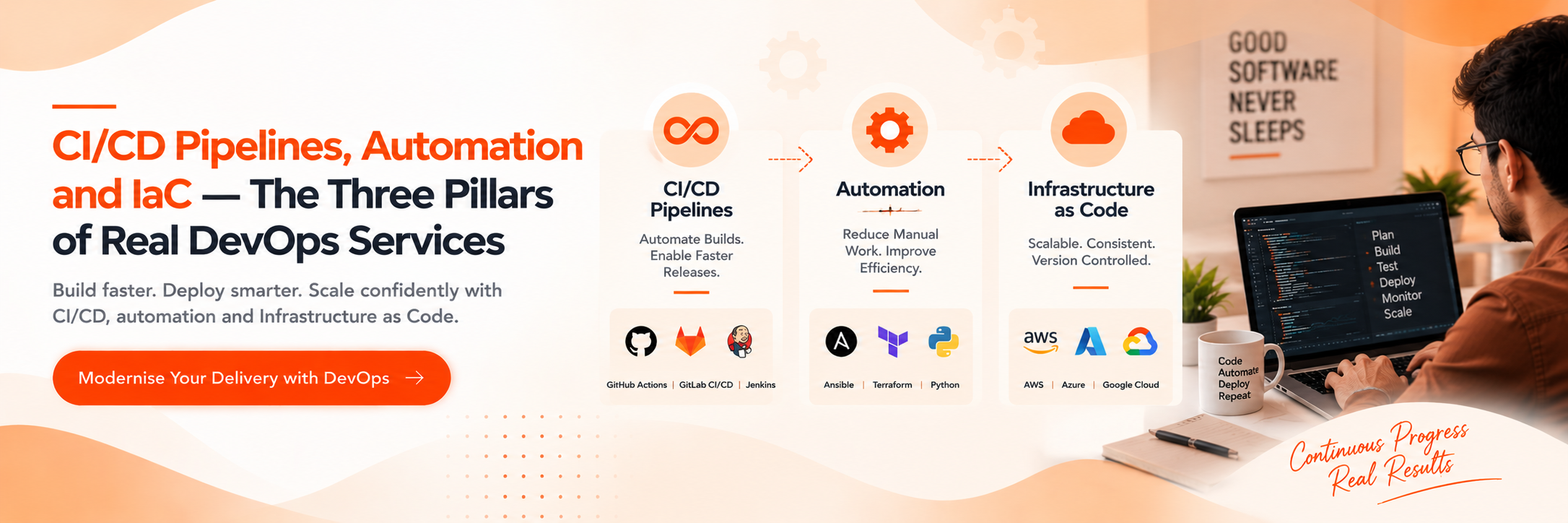
Any DevOps services provider worth working with should be able to speak clearly and specifically about how they implement the three foundational disciplines of modern DevOps – CI/CD pipelines, automation, and Infrastructure as Code. If a company’s answers to questions about any of these three areas are vague or generic, that tells you something important.
CI/CD pipelines
A CI/CD pipeline – Continuous Integration and Continuous Delivery – automates the process of taking code from a developer’s machine to a production environment. Every commit triggers a build. Every build runs the test suite. Passing builds are automatically deployed to staging environments. Production deployments happen on demand with a single approval step rather than a manual, multi-hour process that requires someone to be at a keyboard.
The quality of a CI/CD pipeline determines the speed and reliability of your entire software delivery process. A badly designed pipeline is slower and less reliable than the manual process it was meant to replace. Ahom’s DevOps engineers design CI/CD pipelines using GitHub Actions, GitLab CI/CD, and Jenkins – choosing the right tool based on your existing stack and team familiarity rather than on what the DevOps team prefers.
Infrastructure as Code
Infrastructure as Code means that every server, every network configuration, every database instance, and every security group is defined in version-controlled code rather than configured manually through a cloud console. When your infrastructure is code, it can be reviewed, tested, replicated, and rolled back like any other software artefact. Environments become reproducible. Configuration drift — where production gradually diverges from staging in ways nobody fully understands — becomes detectable and preventable.
Ahom uses Terraform as the primary IaC tool across cloud platforms, with Ansible for configuration management where appropriate. These are not choices made for convenience — they are the industry-standard tools that produce the most reliable, maintainable infrastructure definitions.
DevOps automation
Beyond CI/CD and IaC, DevOps automation extends into testing automation, security scanning, cost monitoring, and incident response. Automated tests run on every build. Security scans check for vulnerabilities before code reaches production. Cost anomaly alerts fire when cloud spend deviates from expected patterns. Runbooks for common incidents are automated so that the first response happens in seconds rather than minutes. This breadth of automation is what separates a mature DevOps practice from a basic pipeline setup.
4. How to Evaluate a DevOps Services Provider in India Before You Commit
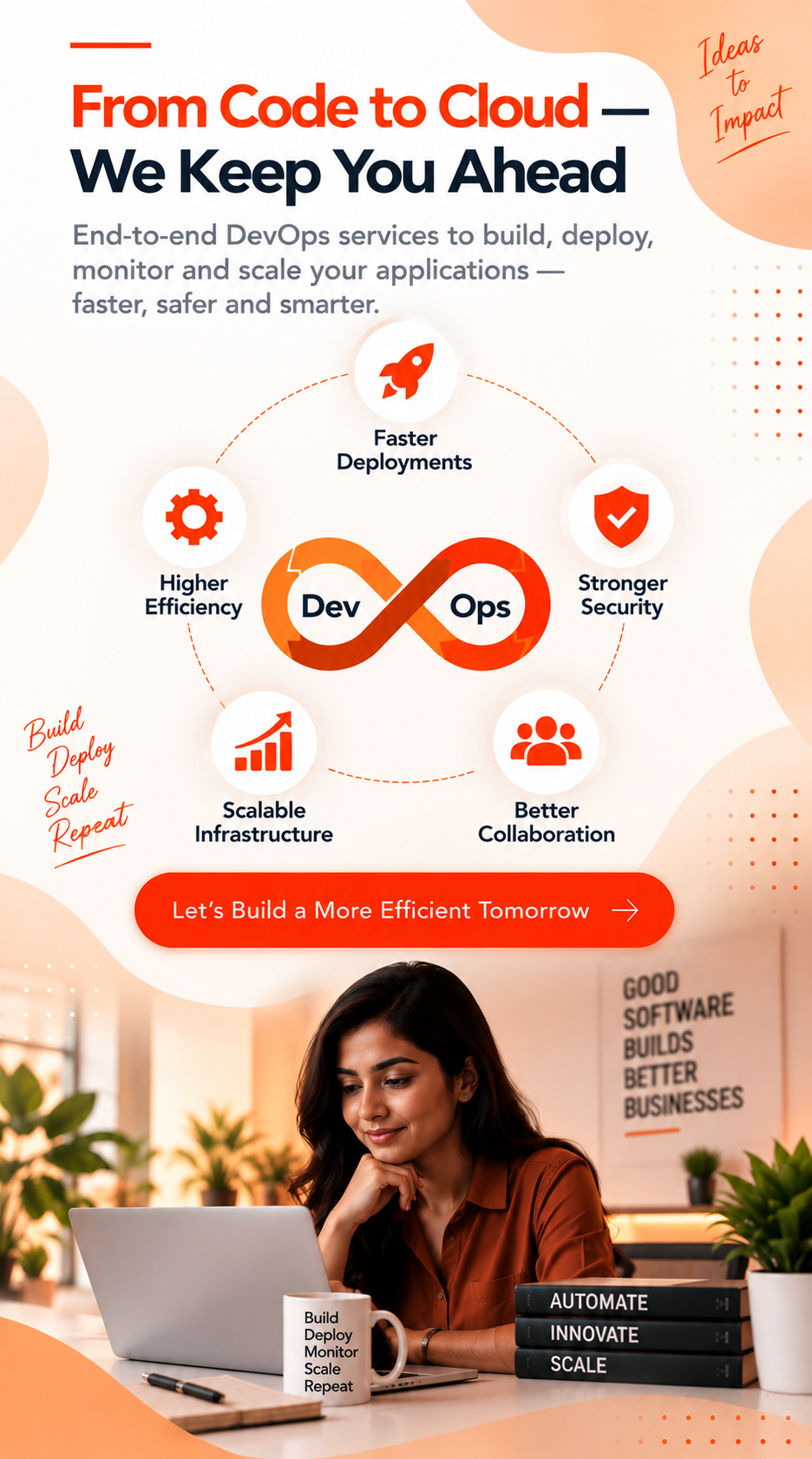

A structured evaluation process before you commit to a DevOps partner protects your infrastructure, your delivery timelines, and your engineering team from the consequences of a poor choice. These are the questions and criteria that surface the truth rather than the pitch.
Ask for specific tooling decisions and why
Ask any prospective DevOps services provider which tools they plan to use and why – for CI/CD, for IaC, for containerisation, for monitoring, for security scanning. A team with genuine expertise gives you specific, contextual answers – they recommend Terraform over CloudFormation for multi-cloud environments, or GitHub Actions over Jenkins for teams already in the GitHub ecosystem, because they understand the trade-offs. A team without depth gives you a list of tools without any reasoning behind the choices.
Ask how they have handled a production incident
Every DevOps team that has operated real production environments has dealt with incidents. Ask for a specific example – what broke, how it was detected, how the team responded, and what was changed afterwards to prevent recurrence. The quality of the answer tells you more about a team’s operational maturity than any certification or case study summary.
Confirm the post-engagement model
Understand specifically what happens after the initial setup is complete. Is there ongoing monitoring? Who responds when an alert fires at 2am? What is the SLA for incident response? How are platform updates and security patches managed? These questions separate DevOps companies that deliver and move on from those that treat the engagement as a long-term operational partnership.
Check for infrastructure and security alignment
A serious DevOps services provider integrates security into the pipeline from the start – not as a final audit before go-live. Ask how they handle secrets management, how they implement role-based access control, and how they approach vulnerability scanning in the CI/CD pipeline. These are not advanced topics – they are baseline expectations for any DevOps engagement that touches production infrastructure.
5. What Ahom Technologies Delivers as a DevOps Services Partner in India
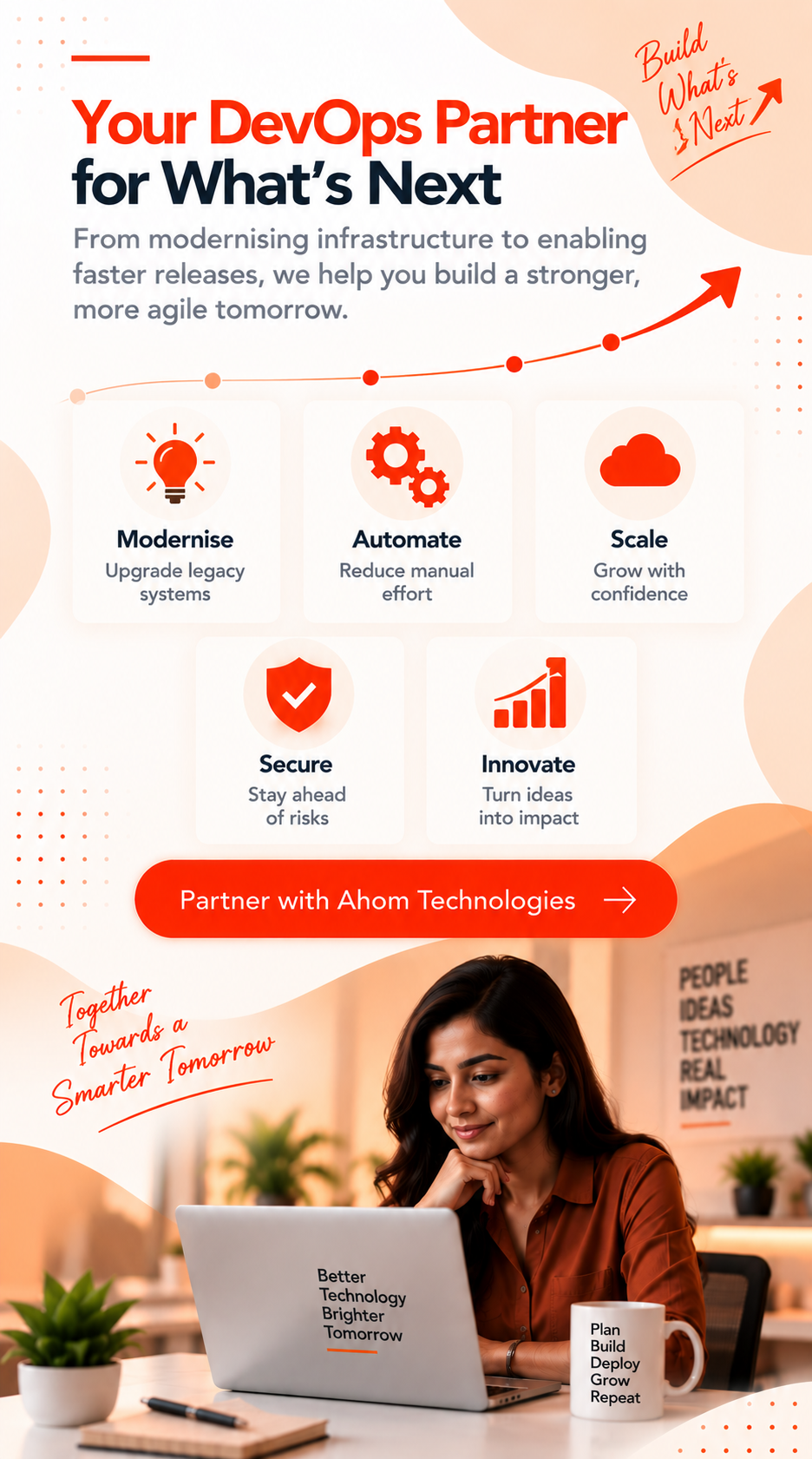
Ahom Technologies has been delivering DevOps services for clients across India, the USA, UK, UAE, and Canada for over a decade. Our DevOps practice has been shaped by the accumulated experience of real production environments – healthcare platforms handling sensitive patient data, fintech applications processing live transactions, e-commerce systems managing peak traffic events, and logistics platforms synchronising real-time fleet data across mobile and backend systems.
Our DevOps engagements cover the complete lifecycle – assessment and roadmap, CI/CD pipeline design and implementation, Infrastructure as Code provisioning, containerisation with Docker and Kubernetes, cloud platform management across AWS, Azure, and Google Cloud, monitoring and alerting with Prometheus and Grafana, and structured post-launch support that keeps environments performing as the applications and teams around them evolve.
Every Ahom DevOps engagement begins with an assessment phase that maps your current development and deployment workflow, identifies the specific bottlenecks and risk areas, and produces a prioritised roadmap for improvement. We do not start building until we understand what you have and where the real problems are.
The team that scopes your engagement is the team that implements it. Your dedicated point of contact remains consistent throughout – from the first assessment through to ongoing monitoring and support. And because Ahom also delivers
software development services and
automation services alongside DevOps, we bring a full-stack perspective to every engagement rather than treating DevOps as an isolated infrastructure concern.
For businesses evaluating their broader
DevOps services requirements – including cloud migration, containerisation, and managed infrastructure – Ahom provides a single accountable partner for the complete DevOps and cloud engineering picture. And for organisations also considering
offshore software development alongside their DevOps needs, the two capabilities are available through the same engagement model.

 DevOps has become one of the most overused words in the Indian technology services market. Every development company, every IT consultancy, and every staffing agency has added it to their service list. The word has been stretched so far that it no longer tells you anything useful about what a company actually does.
So let us be specific about what genuine DevOps services in India should deliver.
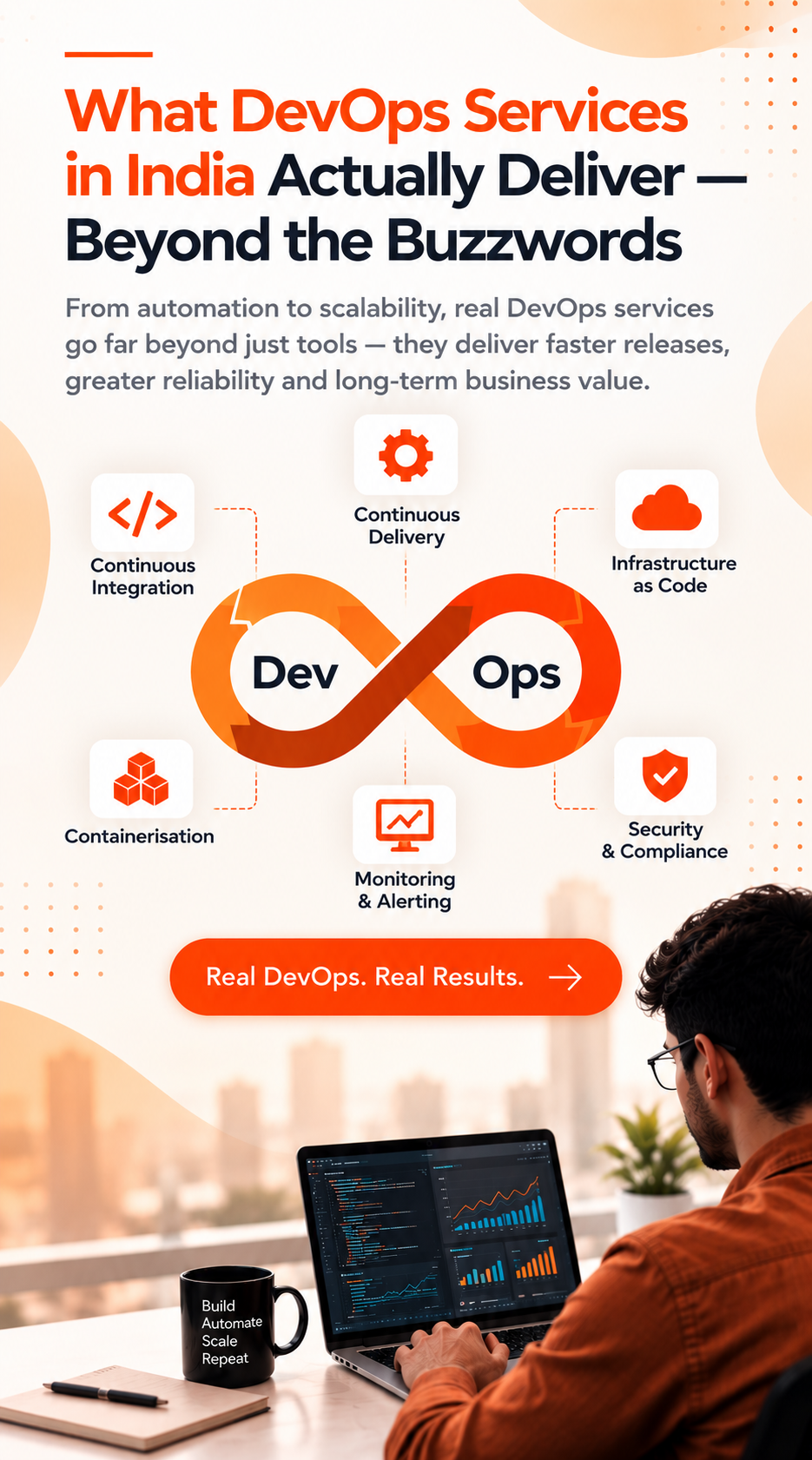
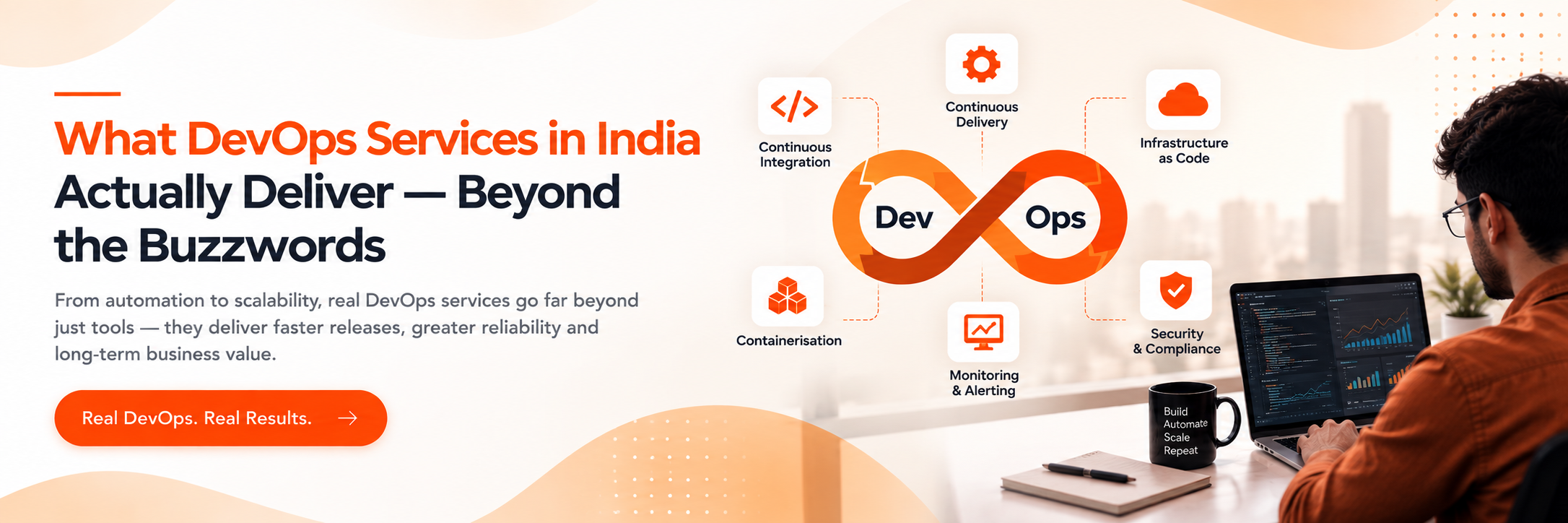
At its core, DevOps is about closing the gap between how software is built and how it is deployed and operated. That means CI/CD pipelines that automate code integration, testing, and deployment. Infrastructure as Code that turns environment provisioning from a manual, error-prone process into a version-controlled, repeatable one. Containerisation using Docker and Kubernetes that makes applications portable and scalable across environments. Monitoring and alerting that gives your team real-time visibility into how the system behaves in production.
DevOps has become one of the most overused words in the Indian technology services market. Every development company, every IT consultancy, and every staffing agency has added it to their service list. The word has been stretched so far that it no longer tells you anything useful about what a company actually does.
So let us be specific about what genuine DevOps services in India should deliver.
At its core, DevOps is about closing the gap between how software is built and how it is deployed and operated. That means CI/CD pipelines that automate code integration, testing, and deployment. Infrastructure as Code that turns environment provisioning from a manual, error-prone process into a version-controlled, repeatable one. Containerisation using Docker and Kubernetes that makes applications portable and scalable across environments. Monitoring and alerting that gives your team real-time visibility into how the system behaves in production.
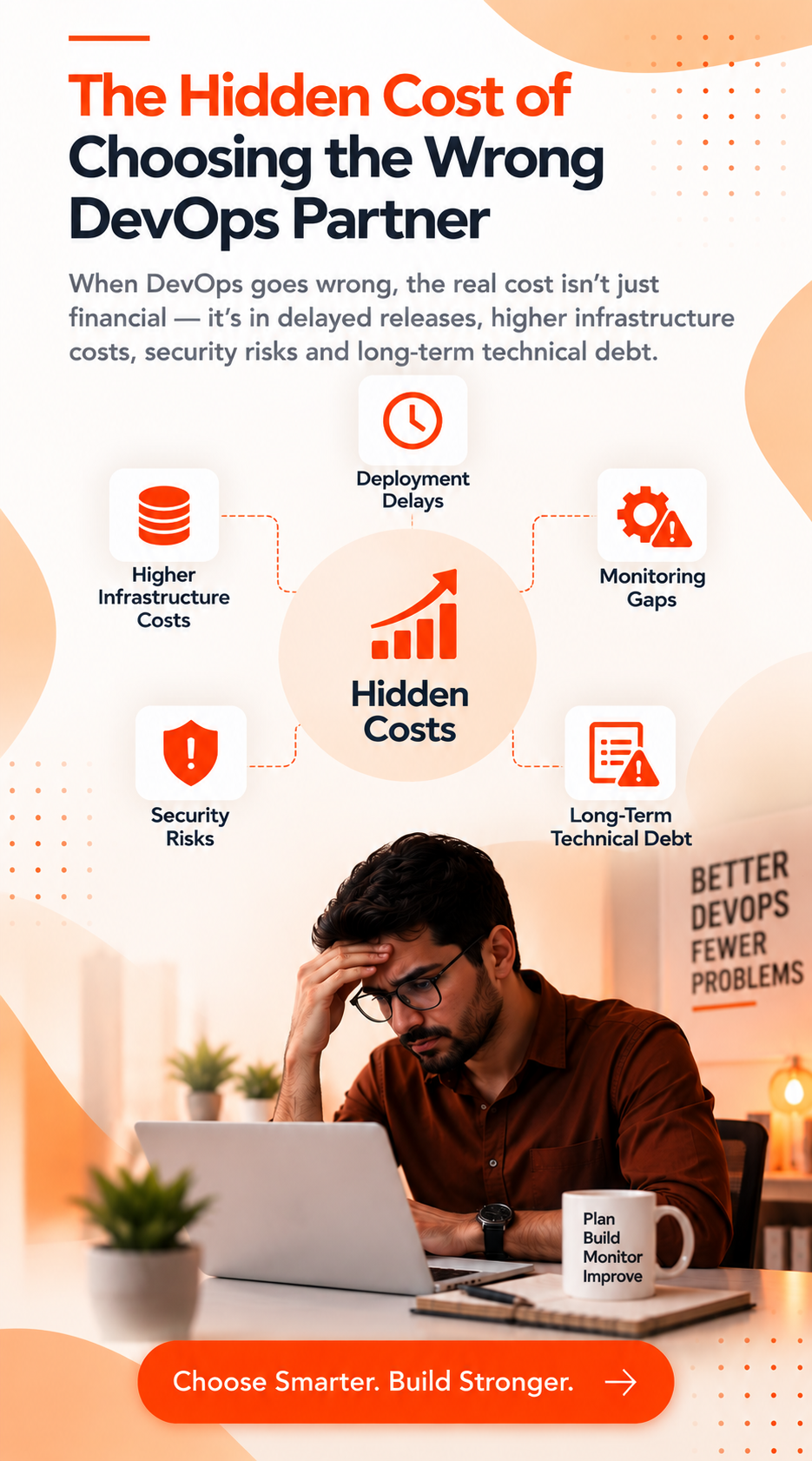
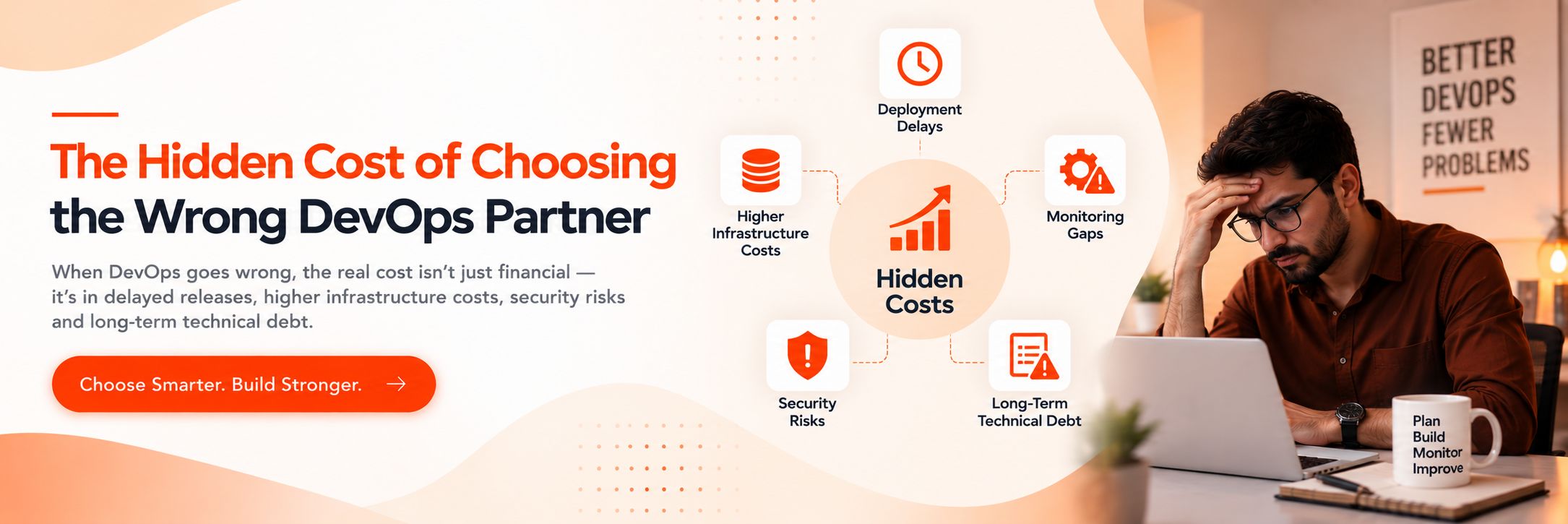 When a DevOps engagement goes wrong, the cost is rarely visible in a single line item. It accumulates quietly – in deployment delays that push release dates back, in infrastructure configurations that are technically functional but poorly optimised, in monitoring gaps that mean production incidents go undetected until users report them, and in technical debt that builds up when shortcuts are taken during setup because the team did not fully understand the implications.
The most expensive DevOps mistakes are not the ones that fail immediately. They are the ones that work just well enough to get through the delivery milestone and then quietly create problems for the next twelve months.
When a DevOps engagement goes wrong, the cost is rarely visible in a single line item. It accumulates quietly – in deployment delays that push release dates back, in infrastructure configurations that are technically functional but poorly optimised, in monitoring gaps that mean production incidents go undetected until users report them, and in technical debt that builds up when shortcuts are taken during setup because the team did not fully understand the implications.
The most expensive DevOps mistakes are not the ones that fail immediately. They are the ones that work just well enough to get through the delivery milestone and then quietly create problems for the next twelve months.